

Imagine opening your storage unit door after a long summer in regional NSW, only to find your prized tool kit or mountain bike covered in a layer of orange grit. It's a gut-sinking feeling that many locals know too well. When you're dealing with the fluctuating humidity of places like Murray Bridge or the Blue Mountains, standard storage can be tough on metal. You need a solid plan for how to prevent rust in your storage unit before you lock the door for the season.
We understand that your gear isn't just stuff; it's an investment or a memory you want to keep in top nick. This guide provides a practical, no-nonsense checklist to ensure your valuables stay pristine while stored in regional NSW or SA. You'll learn how to prep metal surfaces, use affordable barriers like silica gel, and manage the air inside your unit effectively. We're skipping the fancy gear and focusing on simple, DIY steps that give you total confidence your items will be in the same condition when you finally come to collect them.
Key Takeaways
- Understand how regional humidity levels in NSW and SA impact metal surfaces and why a "set and forget" approach doesn't work.
- Follow a simple cleaning and drying checklist to ensure you're not trapping moisture against your valuables before you lock the door.
- Master the professional's secret of how to prevent rust in storage unit environments using affordable VCI barriers and silica gel packets.
- Use tailored protection strategies for tricky items like washing machines, gym gear, and mountain bikes to keep them in top nick.
- Learn why a secure, camera-monitored facility is the most reliable partner for your self-managed storage plan.
Understanding the Rust Risk in Regional Australian Storage
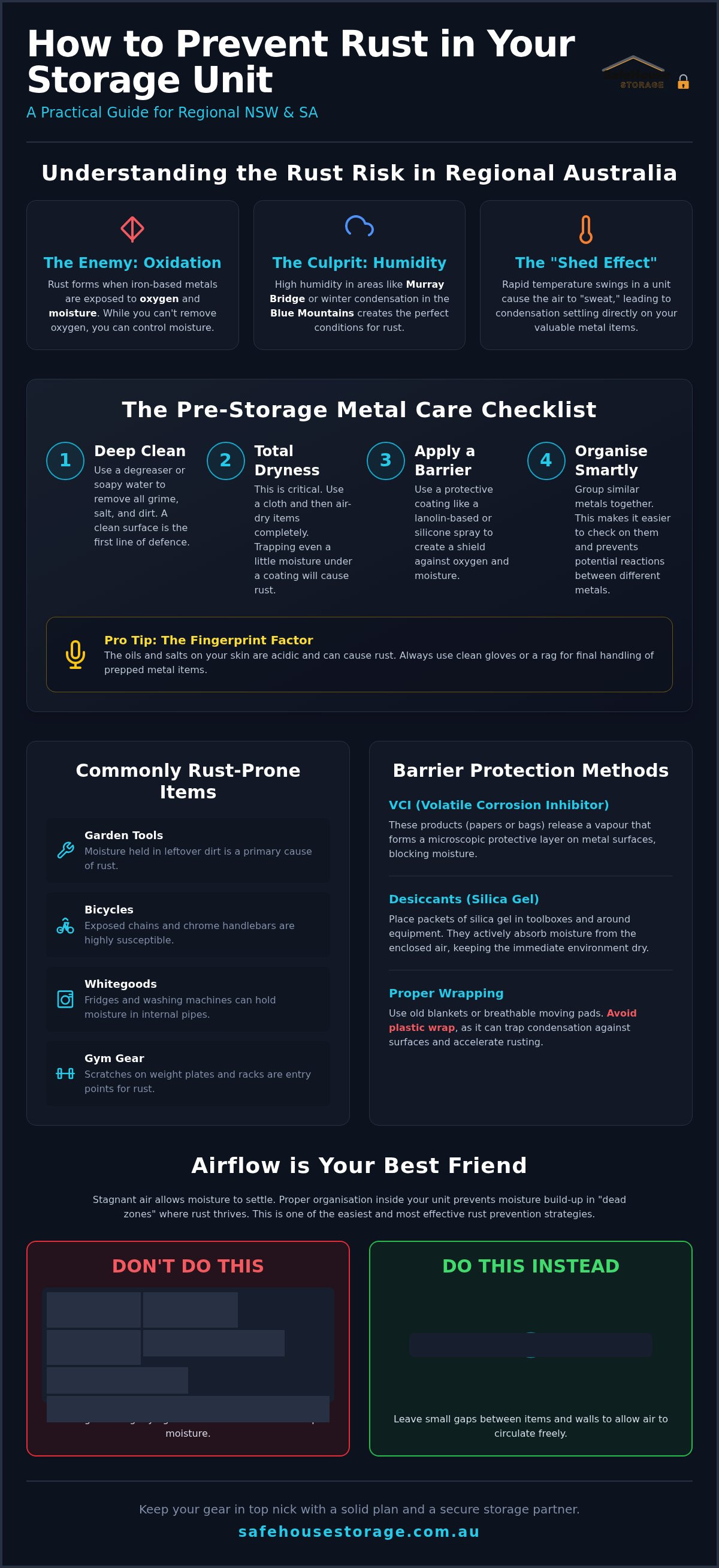
Rust is essentially a slow-motion chemical reaction that eats away at your hard-earned gear. Oxidation is the primary enemy of your stored metal gear. This process happens whenever iron-based metals meet oxygen and moisture. While you can't easily remove the oxygen from a room, you can definitely control the moisture. Learning how to prevent rust in storage unit environments starts with knowing exactly what you are up against in the local climate.
The Role of Humidity in Murray Bridge and Lithgow
Regional NSW and SA have vastly different weather patterns, but both can be brutal on metal. Towns like Murray Bridge sit right on the river. This means the air often carries high levels of moisture even during the warmer months. In contrast, Lithgow faces bone-chilling winters. When the temperature drops, moisture in the air condenses onto cold metal surfaces like dew on a morning windscreen. This constant cycle of wetting and drying is what triggers the first spots of orange grit on your tools or bike chains.
The "Shed Effect" is another hidden danger. Standard units can heat up quickly during a typical Aussie summer day and cool down rapidly at night. This massive temperature swing causes the air inside to "sweat." If that condensation has nowhere to go, it sits on your items. You should be particularly careful with these rust-prone items:
- Garden Tools: Dirt left on shovels or mowers holds moisture directly against the metal.
- Bicycles: Chrome handlebars and exposed chains are magnets for surface rust.
- Whitegoods: Fridges and washers often have internal metal pipes that stay damp long after they are unplugged.
- Gym Gear: Weight plates and steel racks often have tiny scratches where rust can easily get a foothold.
Why Airflow is Your Best Friend
Stagnant air is a recipe for disaster. When air stops moving, moisture settles. One of the simplest ways to manage how to prevent rust in storage unit spaces is to keep things breathing. Avoid the temptation to pack your boxes tight against the unit walls. Leave a small gap between your items and the boundary to let air circulate freely. This is a strategy we often recommend in our Safe Long-Term Furniture Storage Guide for NSW. Good airflow helps regulate the temperature and prevents moisture from being trapped in "dead zones" where rust thrives.
The Pre-Storage Metal Care Checklist: Cleaning and Coating
Rust doesn't start in the unit; it often starts in your driveway or garage before you even pack the car. If you want to know how to prevent rust in storage unit spaces, you have to start with a clean slate. Any dirt, grease, or salt left on your metal items will act as a bridge for moisture. Prep is everything. If you don't clean it first, you're just sealing in the problem.
Follow these four steps for every metal item you plan to store:
- Step 1: Deep Clean. Use a mild degreaser or warm soapy water to strip away grime. For items used near the coast or river, this is non-negotiable to remove salt.
- Step 2: Total Dryness. This is the most critical step. If you apply oil over a damp surface, you're trapping moisture against the metal. Use a lint-free cloth and let items air-dry in the sun until they are bone-dry.
- Step 3: Apply a Barrier. Use a protective spray or wax to seal the surface from the air. This creates a literal shield that oxygen can't penetrate.
- Step 4: Organise by Metal Type. Group your steel tools together and keep your aluminium gear separate. This makes it much easier to do a quick visual check when you visit your unit.
Choosing the Right Protective Coating
Lanolin-based sprays are an Aussie favourite for a reason. Derived from sheep's wool, lanolin is natural, non-conductive, and doesn't wash off easily. It's perfect for long-term protection on everything from garden shears to trailer hitches. For parts that involve rubber or plastic, like the seals on a washing machine, stick to a silicone-based spray. Avoid heavy grease unless you're storing industrial machine parts; it's a nightmare to clean off later. A light, consistent coat is usually all you need to keep things in top nick.
The Fingerprint Factor
It sounds like something out of a detective show, but your fingerprints are a major cause of corrosion. The natural oils and salts on your skin are surprisingly acidic. If you touch a clean steel surface and then put it into storage, you might find a rusted fingerprint in six months. Always handle your items with clean cotton gloves or a rag during the final wipe-down. Use this quick prep checklist for garden tools: scrape off dried mud, wire brush any existing surface rust, and wipe the metal with a lanolin-soaked rag. Once your gear is prepped and ready, finding a secure storage unit in regional NSW or SA is the final piece of the puzzle for total peace of mind.
Barrier Protection: Using VCI, Silica, and Proper Wrapping
Once your items are clean and coated, you need to create a secondary line of defence. This is where barrier protection comes in. If you want to know how to prevent rust in storage unit spaces, you need to manage the micro-climate inside your boxes. Think of it as building a "unit within a unit" using sealed plastic tubs for smaller metal bits and specialised wraps for the big gear. By controlling the air immediately surrounding your valuables, you stop the rust cycle before it even begins.
VCI Paper and Bags for Tools and Parts
Vapor Corrosion Inhibitors (VCI) sound like industrial jargon, but they are incredibly simple for home use. These materials release a dry vapour that settles on metal surfaces, creating an invisible protective bubble that blocks oxygen. You can buy VCI self-sealing bags in packs of 100 for around $21 to $43 at retailers like Big W. They are perfect for the "stow and go" method; just drop your hand tools or drill bits inside and seal them up. For larger tool chests, line the drawers with VCI paper for double protection. While SafeHouse provides a secure unmanned storage facility NSW locals trust, your prep work inside the unit is what ensures your gear stays in top nick.
Desiccants and Moisture Absorbers
Silica gel is your best friend for fighting moisture in sealed containers. You can pick up a pack of 100 small packets for about $10.10 from local electronics or specialist stores. For a medium-sized storage tub, use at least five to ten 0.5g packets to be safe. If you are protecting a larger area, look for hanging moisture absorbers like DampRid. These bags pull water straight out of the air and collect it in a reservoir. Pro tip: don't throw away your silica gel when it feels heavy. You can "recharge" most packets by heating them in a domestic oven at a low temperature (about 100°C) for an hour to bake the moisture out.
Be careful with plastic wrap. It might look secure, but standard shrink wrap often traps moisture against the metal, which accelerates rust. Breathable covers like old cotton sheets or moving blankets are much better for larger items like bikes. They allow air to move while keeping dust off. If you must use plastic for a specific reason, ensure the item is 100% dry and toss a few silica packets inside before sealing it. This prevents the "greenhouse effect" from ruining your gear while it sits in your unit.
Storing Specific Items: From Garden Tools to Whitegoods
Different gear requires different tactics. While the basics of cleaning and coating apply across the board, specific items like fridges or mountain bikes have unique vulnerabilities. If you want to master how to prevent rust in storage unit facilities, you need to look past the surface. Protecting a lawnmower is a different beast compared to saving a stainless steel fridge from "tea staining" or surface corrosion.
Prepping Whitegoods for Long-Term Storage
Fridges and washing machines are notorious for rusting from the inside out. This happens because moisture gets trapped in internal pipes or behind rubber seals long after the power is cut. Start by cleaning the seals with a vinegar solution to kill any lingering mould. Once dry, leave the doors slightly ajar; use a piece of cardboard or a wedge to keep them open about five centimetres. This allows air to circulate inside the drum or cavity. For the exterior, apply a light coat of car wax to the enamel. It adds a protective layer that keeps the finish looking new. Check out our guide on how to organise a storage unit to ensure your appliances aren't blocked by other boxes, which restricts that vital airflow.
Bikes and Outdoor Gear
Bicycles and gym equipment are prone to surface corrosion on chrome parts and chains. Before you store your bike, give the chain and derailleurs a fresh coat of oil. This seals the metal links from humidity. Avoid using a plastic tarp to cover your gear. Plastic creates a "sweat box" effect that accelerates damage. Use an old cotton sheet or a proper breathable bike cover instead. If you are storing motorised items or looking for car storage Murray Bridge drivers often use, remember to check your brake rotors. A quick spray of specialised brake cleaner or a light coating of oil (which must be removed before driving) can prevent that thin layer of orange grit from forming on the discs.
For motorised gear like mowers and whipper-snippers, clean the deck thoroughly. Dried grass holds moisture and acidity that eats through steel over time. For outdoor furniture, check for chips in powder-coated finishes. These small gaps are where rust starts. Dab some matching touch-up paint or even clear nail polish over the chip to seal it. Wrought iron pieces benefit from a quick wipe with a rag dampened in linseed oil. Once your gear is prepped, you can book a secure storage unit online and rest easy knowing your valuables are protected by your own careful prep work.
Choosing a Secure, Local Unit for Peace of Mind
While your prep work is vital, the environment where you leave your gear matters just as much. A leaky backyard shed or a friend's garage often lacks the structural integrity to keep out the elements. Professional facilities are designed with security and durability in mind. Gated access and camera monitoring provide a level of protection that a simple padlock can't match. When you're deciding how to prevent rust in storage unit settings, starting with a well-maintained, secure space is half the battle. It gives you a controlled baseline that a backyard option simply can't offer.
The SafeHouse Security Advantage
Our facilities in regional towns prioritise both safety and simplicity. Because we use an unmanned model, you have the privacy to organise and manage your items without a manager watching over your shoulder. You get independent access whenever you need it, allowing you to check on your valuables at your convenience. Securing a space is effortless. Our online agreements allow you to book and sign in minutes, removing the need for face-to-face appointments. If you're only looking to store a few toolboxes or a bike, you can easily book a small storage unit rental through our website today.
Choosing the right unit size is a strategic move for rust prevention. If you cram a small unit to the ceiling, you kill the airflow we discussed in previous sections. It's often better to opt for a slightly larger space where you can leave gaps between your boxes and the walls. This extra breathing room ensures that humidity doesn't get trapped in the centre of your stack. Think of it as an insurance policy for your gear.
Final Inspections and Maintenance
A "set and forget" mentality is risky when it comes to metal. We recommend a "rust check" visit every three to four months. During these visits, look for any new signs of orange spotting or condensation on your breathable covers. If you notice a silica gel packet has changed colour or feels heavy, it's time to swap it out or recharge it. This proactive approach is the best way to manage how to prevent rust in storage unit spaces over the long term. If you have questions about availability or specific unit features, our local real-estate partners are always ready to help you find the right fit for your needs. They know the local landscape and can guide you toward the best solution for your storage project.
Lock in Protection for Your Valuables Today
Your metal gear is an investment that deserves to stay in top nick. Managing how to prevent rust in storage unit spaces across regional NSW and SA doesn't have to be complicated. It comes down to a few practical steps: clean thoroughly, apply a reliable barrier, and choose a storage partner that prioritises security. When you control the micro-climate inside your boxes and allow for proper airflow, you remove the stress of finding orange grit on your prized tools or bikes later on.
We make it easy to secure a space that fits your needs. SafeHouse Storage offers gated access and 24/7 camera monitoring at convenient locations like Murray Bridge and Lithgow. Our simple online contracts and unmanned model mean you can book in minutes with no long-term lock-ins. You have total control over your gear in a space designed for reliability. Find your secure storage unit and book online today. With your prep work finished and a secure unit locked, you can rest easy knowing your valuables are ready for their next job.
Frequently Asked Questions
Can I stop rust in a storage unit without climate control?
Yes, you can definitely prevent rust without climate control by using the right preparation techniques. Since SafeHouse Storage facilities in towns like Lithgow or Murray Bridge provide standard units, you should focus on creating a "micro-climate" around your metal gear. Use protective coatings like lanolin or wax, and seal smaller items in airtight tubs with desiccants. These DIY steps are often more effective for rust prevention than relying on ambient air temperature alone.
What is the best oil to prevent rust on tools in storage?
Lanolin-based sprays are widely considered the best choice for protecting tools in regional NSW or SA conditions. They are natural, long-lasting, and create a thick barrier that won't easily evaporate. For moving parts or machinery, a specialised Vapor Corrosion Inhibitor (VCI) oil or a light machine oil works well. Avoid heavy automotive grease for household tools; it's too messy and can trap existing moisture against the metal if not applied to a bone-dry surface.
Do silica gel packets really work in a large storage shed?
Silica gel packets only work effectively when placed inside sealed containers, boxes, or tool chests. They cannot lower the humidity of an entire storage unit because the volume of air is too large. If you are wondering how to prevent rust in storage unit environments, use at least five to ten 0.5g packets per medium-sized plastic tub. For larger open areas, use hanging moisture absorbers like DampRid to pull water from the air more aggressively.
Should I wrap my furniture in plastic to prevent rust?
You should avoid wrapping metal furniture or appliances tightly in non-breathable plastic wrap. Plastic often traps condensation against the surface, which accelerates the rusting process during the temperature swings common in Coonabarabran or Tenterfield. Use old cotton sheets, moving blankets, or specialised breathable fabric covers instead. These allow air to circulate while still protecting your gear from dust. If you must use plastic for a specific reason, toss several silica packets inside before sealing it.
How often should I check my items for rust in a storage unit?
We recommend visiting your unit for a "rust check" every three to four months. This is particularly important after heavy rain or during the high-humidity seasons in Murray Bridge. During your visit, wipe down exposed metal surfaces and check that your moisture absorbers aren't full. Regular inspections allow you to catch small spots of surface corrosion before they turn into permanent damage. It only takes a few minutes but provides total peace of mind for your valuables.
Will my fridge rust if I store it in a non-climate-controlled unit?
A fridge won't necessarily rust in a standard unit if it is prepped correctly. The biggest risk is moisture trapped inside the internal pipes or behind the door seals. Clean the exterior with car wax to protect the enamel finish. Crucially, leave the doors slightly ajar to ensure airflow reaches the interior. This prevents the "greenhouse effect" from causing internal corrosion. Following these simple steps ensures your whitegoods stay in top nick without needing expensive climate control.
Is it safe to store petrol-powered tools in a SafeHouse unit?
You can store petrol-powered tools like mowers or whipper-snippers, but you must drain all fuel and oil first. Storing flammable liquids is strictly prohibited in our gated facilities for safety and insurance reasons. Once drained, clean the metal deck thoroughly to remove acidic grass clippings. Apply a light coat of lanolin to any exposed metal parts. This keeps your equipment safe and compliant with the terms of your online storage agreement.
How much does it cost to rent a small storage unit in regional NSW?
Prices for a small storage unit vary depending on the specific location and current availability in towns like Lithgow or Tenterfield. Because our unmanned model keeps overheads low, we can offer competitive rates for our secure, gated spaces. The best way to get an accurate price is to check our online booking system. You can view real-time availability and secure your space instantly through our online agreements without needing a face-to-face appointment.


