
Need storage in regional NSW, but unsure whether a provider has a facility near your town? Finding self storage New South Wales starts with checking local coverage, not assuming one operator serves the whole state. Then compare the available unit and rental arrangements with what you need to store.
It’s reasonable to want clear answers before choosing. The right unit depends on what you’re storing, while access arrangements and security features can vary between facilities. With self-managed storage, it also helps to understand how you’ll manage the unit before moving your belongings in.
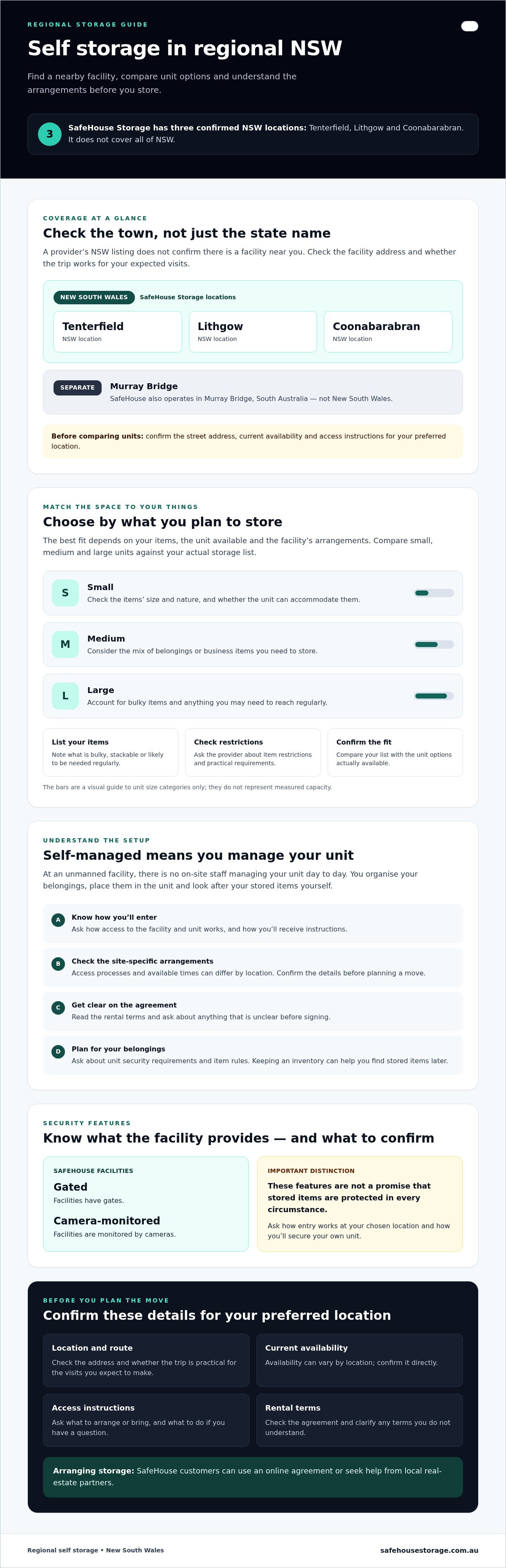
This guide explains what to check when comparing regional NSW options, how to assess small, medium and large units, and what to ask about access, security and rental terms. SafeHouse Storage has locations in Tenterfield, Lithgow and Coonabarabran, not throughout all of NSW. Its facilities are gated and camera-monitored, and customers can arrange storage online or seek help from local real-estate partners. SafeHouse also operates in Murray Bridge, South Australia. You’ll find practical steps for making an enquiry and preparing to store your items.
Key Takeaways
- Check which towns a self storage New South Wales provider actually serves, rather than assuming its coverage is statewide.
- Compare small, medium and large units against the belongings or business items you plan to store, including bulky items and anything you may need to reach.
- Before choosing a self-managed facility, consider whether its security features and arrangements suit how you’ll manage your unit.
- Confirm current availability, access instructions and rental terms for your preferred location before planning to move items in.
- Find out how to arrange storage in Tenterfield, Lithgow or Coonabarabran, including options for an online agreement or help from a local real-estate partner.
Self storage in New South Wales: what regional customers need to know
Self storage is rented space for belongings or business items that you manage yourself. You choose what goes into the unit, organise it inside and look after your stored items. For a plain-language overview of what is self storage and how the industry works, Wikipedia offers useful background.
A search for self storage New South Wales can bring up providers with very different coverage. Some focus on major centres or operate across several regions, while others serve particular towns. A state name in a search result doesn’t confirm there’s a facility near you. Check the facility’s street address and town before comparing unit options or rental arrangements.
What can self storage help you manage?
At home, storage can help keep furniture, boxes and other belongings together during a move, renovation or change in living arrangements. A small business might need space for stock or equipment. To start assessing a unit, list the items you plan to store and note which are bulky, stackable or likely to be needed regularly. The best fit depends on the items’ size and nature, the unit available and the facility’s arrangements. Ask the provider about item restrictions and practical requirements before you commit.
Does a New South Wales provider cover your town?
Start with the facility address, then check the route from home or work. Consider how long the trip takes and whether it’s practical for the visits you expect to make. Confirm directly that the location suits your needs, and ask about current availability and access instructions. Don’t rely on a broad NSW service label alone.
SafeHouse Storage’s confirmed NSW locations are Tenterfield, Lithgow and Coonabarabran. This is not statewide coverage, so check whether one of these towns is convenient for you. SafeHouse also operates in Murray Bridge, which is in South Australia, not New South Wales.
Once you’ve found a nearby facility, compare its unit options and arrangements with the items you plan to store. A suitable location is only one part of the decision. Check that the unit can accommodate your items and that you’re comfortable managing it yourself.
How regional NSW self storage works at a self-managed facility
At an unmanned self-storage facility, there isn’t on-site staff to manage your unit day to day. You organise your belongings, place them in the unit and manage them yourself. SafeHouse Storage facilities are unmanned, so this setup may suit you if you’re comfortable handling your own storage rather than relying on staff at the facility.
What does self-managed storage involve?
Before you agree to rent, get clear on how you’ll enter the facility and unit, what you need to bring or arrange, and what to do if you have a question. Access instructions can differ by location, so don’t assume the process or available times are the same at every site. If anything is unfamiliar, ask the relevant contact before making plans to move your items.
SafeHouse customers can arrange storage through an online agreement or seek help from local real-estate partners. You can check the regional secure self-storage guide for more practical considerations. For general information about Australian consumer protections, the ACCC explains consumer rights and guarantees. Read the storage agreement and ask about terms that aren’t clear before signing.
How do gates and camera monitoring fit into storage security?
SafeHouse facilities are gated and camera-monitored. These are security features, not a promise that stored items are protected in every circumstance. Ask how entry works at your chosen location, including how you’ll receive access instructions and whether there are site-specific steps to follow. Confirm these details directly before arranging a rental.
It’s also sensible to check how you’ll secure your own unit and what rules apply to the items you plan to store. Ask whether there are requirements for securing the unit, and keep a record of what you put away, especially if you’re storing business stock or equipment. A simple inventory can also help you find items later.
If self-managed storage sounds suitable, you can check SafeHouse Storage location details and ask about the access arrangements for the facility you’re considering. Confirm current availability and rental terms directly, as these can vary by location.
Compare self storage options in Tenterfield, Lithgow and Coonabarabran
For regional self storage, start your comparison with practical details, not assumptions about which town or provider is best. SafeHouse Storage has confirmed facilities in Tenterfield, Lithgow and Coonabarabran. The table summarises what’s known. Check current unit options, availability and rental terms for your chosen location before making plans.
| Town | Confirmed facility presence | Unit sizes | Enquiry route |
|---|---|---|---|
| Tenterfield | SafeHouse Storage facility confirmed | Small, medium and large units are offered; confirm current options | Online agreement or local real-estate partner |
| Lithgow | SafeHouse Storage facility confirmed | Small, medium and large units are offered; confirm current options | Online agreement or local real-estate partner |
| Coonabarabran | SafeHouse Storage facility confirmed | Small, medium and large units are offered; confirm current options | Online agreement or local real-estate partner |
What should you compare between NSW storage locations?
First, consider the drive from home or work and how often you may need to visit. Then ask what unit sizes are currently available and how to arrange a rental. Confirm access instructions and whether arrangements differ between facilities. These details help you compare self storage New South Wales options against your routine, rather than choosing on town name alone.
If you think a smaller space may be enough, use this small storage unit hire guide to help prepare your questions. For general industry information, the Self Storage Association of Australasia is another reference. It’s not a substitute for checking the specific facility’s terms and arrangements.
Which items and storage needs should you check first?
Make a list before you enquire. Note bulky items, boxes and anything you may need to reach regularly. Think about the space the items take up and how you’ll arrange them. This gives the provider a clearer picture of your needs and helps you discuss whether a particular available unit could suit.
- List the items and estimate how much space they take up.
- Identify anything you’ll need to access during the rental.
- Ask about unit suitability, current availability and location-specific arrangements.
If you’re considering storing a vehicle, check that the facility and unit are suitable first. This car storage unit size guide may help you frame those questions, though it focuses on Murray Bridge.
How to choose and arrange self storage in regional NSW
A clear process helps you choose self storage in New South Wales without relying on assumptions about location, unit size or access. Check the details for the specific facility before you commit. SafeHouse customers can arrange storage through an online agreement or seek help from local real-estate partners.
- Check the location. Confirm the facility is in a town that works for you and consider how practical the trip will be when you need to visit.
- List what you’ll store. Note the larger items, overall volume and anything you may need to reach often. This gives you a useful starting point when discussing unit size.
- Ask about current options. Confirm which small, medium or large units are available at your chosen location. Don’t assume sizes or availability are the same across facilities.
- Clarify the terms and access. Check the rental terms, how access works at that site and what you need to do before moving items in.
- Arrange the rental and prepare. Review the agreement, ask about anything unclear, then plan transport and how you’ll place your belongings in the unit.
What should you confirm before signing an agreement?
Get the current details for the location you plan to use: unit size, availability and rental terms. Check the access instructions and any steps you need to complete before move-in. Read the agreement carefully. If it doesn’t answer a question, ask the relevant local contact before signing rather than guessing.
With SafeHouse, you can use the online agreement or seek help from a local real-estate partner. Choose the route that suits you, and make sure you understand how to manage your unit at the selected facility.
How can you prepare for a straightforward move-in?
Sort or measure your belongings so you can discuss a practical unit size. Make a note of the largest items and whether you’ll need to reach particular belongings during the rental. Plan how you’ll transport them and which items should go in first. Keep documents and things you may need soon easy to reach, rather than burying them at the back of the unit.
If you need storage between homes, the regional moving storage guide can help you think through timing and practical steps. For SafeHouse’s confirmed NSW towns and enquiry options, explore SafeHouse storage options and confirm current details directly.
Find a SafeHouse self storage location in New South Wales
SafeHouse Storage has confirmed NSW locations in Tenterfield, Lithgow and Coonabarabran. These towns are not a statewide service area, so first check whether one is practical for your home, work or business. Consider how often you may need to visit and whether the trip suits your plans. SafeHouse also operates in Murray Bridge, South Australia.
Is SafeHouse available in your part of NSW?
A search for self storage New South Wales can cover a wide area, but the useful question is whether there’s a suitable facility within reach. SafeHouse’s listed NSW towns are Tenterfield, Lithgow and Coonabarabran. If none works for you, don’t assume another NSW location is available. Check directly before choosing a unit or making arrangements.
Availability and unit options can change. Confirm current details for your preferred town, including whether a small, medium or large unit is available, the rental terms and the location’s access instructions. Getting these answers first can help you decide whether the facility fits your needs.
What is the next step if a location suits?
If a location is convenient, SafeHouse offers two ways to arrange storage. You can complete an online agreement or, if you’d prefer help or have questions, seek assistance from a local real-estate partner. Ask about anything unclear before agreeing, including unit size, current availability and the steps to take before moving items in.
SafeHouse’s units are self-managed, so make sure you’re comfortable looking after your own stored items and understand how access works at the specific facility. The process is more straightforward once the location and practical details are clear.
Ready to check your options? Explore SafeHouse’s location details and enquire about a suitable unit in Tenterfield, Lithgow or Coonabarabran before making plans.
Make your regional storage choice with confidence
Choosing self storage New South Wales starts with finding a facility that’s practical for your town, then checking that the unit and arrangements suit what you need to store. SafeHouse Storage’s confirmed NSW locations are Tenterfield, Lithgow and Coonabarabran, not statewide coverage. Its gated, camera-monitored facilities offer small, medium and large self-managed units.
Before making plans, confirm current availability, rental terms and access instructions for your chosen location. You can arrange storage through an online agreement or seek help from a local real-estate partner. These steps give you a clear way to ask questions and decide whether the unit suits your belongings or business items.
Ready to check what’s available near you? Check SafeHouse locations and enquire about storage. With the location and details confirmed, you can take the next step at your own pace.
Frequently Asked Questions
What does self storage mean?
Self storage means renting a unit to keep belongings or business items, then managing the stored items yourself. You organise what goes into the space and decide how to arrange it. At SafeHouse Storage, units are self-managed and facilities are unmanned. Consider what you’ll store and how often you may need to reach it when deciding whether this arrangement suits you.
Where does SafeHouse Storage operate in New South Wales?
SafeHouse Storage has facilities in Tenterfield, Lithgow and Coonabarabran in NSW. These confirmed towns don’t mean the business covers the whole state, so check whether a listed location is practical for you. SafeHouse also operates in Murray Bridge, which is in South Australia, not NSW. Confirm current local unit availability, rental terms and access instructions before making plans.
Is self storage at an unmanned facility safe?
No storage arrangement can guarantee the safety of every item, but SafeHouse facilities have gates and camera monitoring as security measures. An unmanned facility means you manage your own unit, rather than relying on staff at the site. Before renting, ask how access works at your chosen location, how you secure the unit and what to do if you need help or clarification.
How do I choose the right self-storage unit size?
Start by listing what you plan to store, including bulky items and anything you’ll need to reach regularly. Think about the total volume as well as how you’ll arrange items in the unit. SafeHouse offers small, medium and large units, but current options can vary by location. Ask the local contact which available size may suit your belongings or business items.
Can I rent a SafeHouse storage unit online?
Yes. SafeHouse customers can arrange storage through an online agreement. Before completing it, confirm the chosen town, current unit availability, rental terms and location-specific access instructions. If you’d rather ask questions or get assistance, you can contact a local real-estate partner instead. Either way, review the agreement and clarify anything you’re unsure about before organising your move-in.
What can I store in a self-storage unit?
People may use storage for household belongings such as furniture and boxes, or business items such as stock and equipment. Whether a particular item is suitable depends on its size and nature, the unit available and the facility’s arrangements. Check the rental agreement for item rules, and ask the local contact if you’re unsure whether your belongings can be stored there.
Does SafeHouse offer climate-controlled storage or packing supplies?
No. SafeHouse rents self-managed storage units, but doesn’t offer climate-controlled storage or packing supplies. If your belongings need particular storage conditions, ask about the facility’s arrangements before choosing a unit. You’ll need to organise any packing materials separately. SafeHouse offers small, medium and large units, with current options and availability to be confirmed for the location you’re considering.


