
A small unit might seem like the obvious choice for a one-bedroom apartment, but it can be the wrong fit. The answer to what size storage unit for a 1 bedroom apartment depends less on the number of bedrooms than on what you’re storing. A bed, sofa and whitegoods take up very different space from a mattress and a few boxes.
It’s easy to underestimate bulky furniture or forget to leave room to reach items at the back. A quick inventory helps you compare your belongings with available unit dimensions and avoid choosing a unit that is either too small or larger than you need.
This guide explains how to estimate your storage needs, compare small, medium and large units, and plan a layout that leaves access to the items you may need. Check current dimensions and availability at your local facility before choosing, as sizes can vary between locations.
Key Takeaways
- To decide what size storage unit for a 1 bedroom apartment suits your move, compare your measured belongings with the unit’s internal dimensions.
- List and group your items, then measure bulky furniture in centimetres or metres so you can compare like with like.
- Check how small, medium and large unit options differ at your chosen location before settling on a size.
- Check door access and site-specific restrictions, and consider whether your planned layout leaves a route to items you’ll need.
- Confirm current dimensions and availability with your local facility before choosing a unit.
What size storage unit suits a one-bedroom apartment? Start with what you own
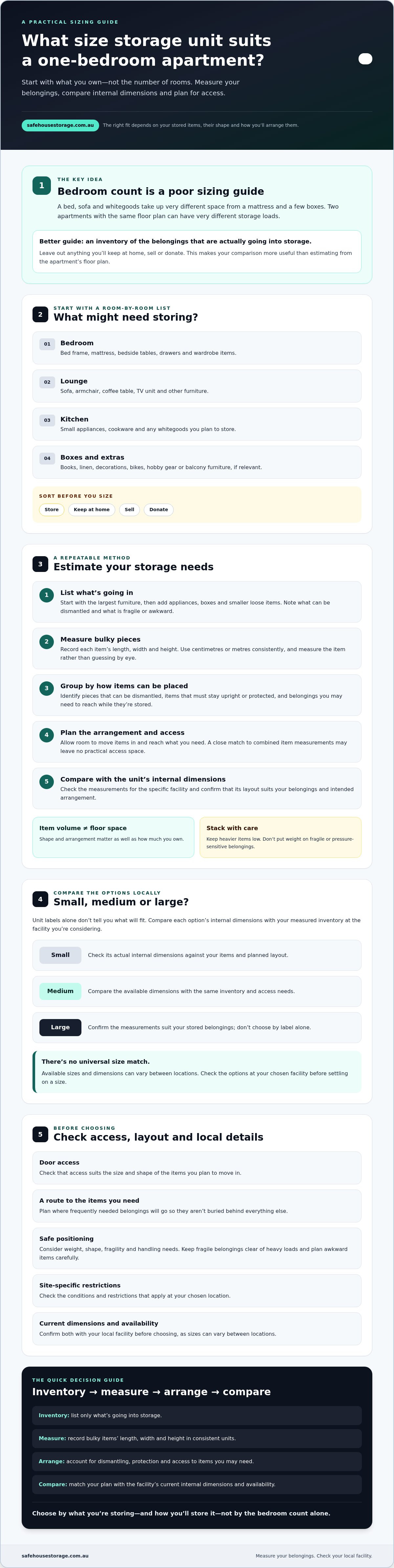
The right storage unit size depends on what you’re storing, how bulky it is and whether you’ll need room to reach items inside. A one-bedroom apartment might contain a bed, sofa, dining table and appliances, or just a few pieces of furniture and packed boxes. The bedroom count alone won’t tell you how much space to rent.
Storage units are measured by their internal dimensions. Check the measurements for the specific facility you’re considering, as sizes can vary. If you’re new to the idea, read this overview of what self-storage is. To choose a size, start with your own belongings.
An inventory is a better sizing guide than a bedroom count because it shows exactly what needs to fit. It also lets you compare your belongings with available unit dimensions instead of guessing from the apartment’s floor plan.
What might need storing from a one-bedroom apartment?
Make a list by area, including only the things that are actually going into storage:
- Bedroom: bed frame, mattress, bedside tables, drawers and wardrobe items.
- Lounge: sofa, armchair, coffee table, TV unit and other furniture.
- Kitchen: small appliances, cookware and any whitegoods you plan to store.
- Boxes and extras: books, linen, decorations, bikes, hobby gear or balcony furniture, if relevant.
Mark each item as “store”, “keep at home”, “sell” or “donate”. This keeps you from choosing a unit based on belongings that won’t be stored.
Why apartment contents matter more than the floor plan
A furnished apartment with a sofa, bed, dining setting and appliances may need a different unit from a lightly furnished or partly decluttered one. Two apartments with the same floor plan can have very different storage loads. Focus on the items you’ve kept, not the rooms you have.
How you prepare furniture matters, too. A disassembled bed frame or table may take up less room than an assembled piece, while mattresses and other awkward items can be harder to position. Fragile belongings may need careful placement rather than being stacked beneath heavier items. Consider each item’s shape and handling needs, not just how many items you have. This gives you a more realistic starting point for working out what size storage unit for a 1 bedroom apartment may suit your belongings.
How to estimate storage space for a one-bedroom apartment
Use the same sequence each time: list your belongings, measure bulky pieces, group similar items, allow room for access, then compare your estimate with the facility’s internal dimensions. This turns “what size storage unit for a 1 bedroom apartment” from a guess into a practical comparison.
Total item volume isn’t the same as the floor space you’ll need: the shape of your belongings and the way you arrange them matter, too. Some items may stack safely; others need to stay upright or have clear space around them. Weight, shape, fragility and safe handling all affect how efficiently you can use the unit.
Build a room-by-room storage inventory
Start with the largest furniture, then add appliances, boxes and smaller loose items. Note whether furniture can be dismantled, and flag fragile or awkward pieces that may need careful positioning. Mark anything you’ll want to reach during storage so it doesn’t end up buried at the back. Use the list as a working plan, not just a headcount.
Measure belongings and allow room to reach them
Measure each bulky item’s length, width and height. Record every measurement consistently in centimetres or metres, using the item’s actual dimensions rather than a visual estimate. Check that the facility’s internal measurements and layout suit your load. A unit that matches the combined measurements exactly may leave no practical room to move items in or reach them later.
Next, group your belongings by how each item can be placed:
- Can be dismantled: note which pieces may take up less room when taken apart.
- Must stay upright or protected: plan for items that shouldn’t be stacked or laid flat.
- Needed during storage: place these where you can reach them without shifting everything else.
Don’t assume every box or piece of furniture can be stacked. Keep heavier items low, and avoid putting weight on anything fragile or vulnerable to pressure. If you’re unsure how an item should be handled, plan to position it separately rather than squeezing it into a tight stack.
For general industry context, you can read about the Self Storage Association, an official trade organization. For your own estimate, the facility’s actual measurements and your intended arrangement matter most. Once your inventory is ready, compare it with the current small, medium and large SafeHouse storage options, and confirm dimensions and availability for the location you’re considering.
Small, medium or large: compare storage unit options for apartment contents
Small, medium and large are useful starting points, not a promise that a particular unit will fit a one-bedroom apartment. SafeHouse Storage offers all three categories, but dimensions can differ by facility. Confirm the current internal measurements at your chosen location before matching a unit to your inventory.
Use this table to guide your comparison, not as a guarantee of fit. The contents listed are examples to check against measured unit dimensions.
| Unit category | Dimensions | Contents to compare |
|---|---|---|
| Small | Confirm current internal dimensions with the facility | A selected piece of furniture, cartons or belongings after downsizing |
| Medium | Confirm current internal dimensions with the facility | A larger selection of furniture, appliances and boxes |
| Large | Confirm current internal dimensions with the facility | A bulkier load, or belongings that need more room for access |
These are comparison prompts, not fixed capacity rules. The shape of your items, how they can be arranged and whether you need to reach them all affect the usable space. Don’t assume a category name means the same dimensions at every facility.
When a small storage unit may be enough
A small unit may be worth comparing if you’ve decluttered and only need to store selected belongings, such as cartons and one or two smaller furniture pieces. Treat that as a possibility, not a fit estimate. Check the unit’s measured internal dimensions against your largest items and planned layout before deciding.
When to compare medium and large units
If your inventory includes more furniture, whitegoods or bulky items, compare the medium and large options using their confirmed dimensions. A larger unit may be useful not only for extra belongings but also for leaving room to reach items you’ll use. If your planned layout fills a smaller unit with no workable access space, check the next size up before choosing.
For a fair comparison, use your measurements rather than generic examples. Check the internal length, width and height, then consider whether your items can be positioned safely. If you’re storing a sofa, bed frame and cartons, for instance, the measurements and shapes of those particular items matter more than the apartment label.
The right answer to what size storage unit for a 1 bedroom apartment comes from comparing your actual load with current local unit dimensions. Confirm measurements and availability for the SafeHouse facility you’re considering before making your choice.
Avoid choosing the wrong unit: check access, layout and local availability
A unit’s internal dimensions are only part of the fit. Check the doorway and route into the unit, especially if you’re storing large furniture or appliances. Ask the facility about any site-specific restrictions that could affect your belongings or how you plan to store them. Check these details against your inventory before choosing.
Plan how belongings will be placed inside the unit
Group your belongings by size and how often you’ll need them. Put items you may want to reach near the front, and plan their position before loading so they don’t get trapped behind bulky furniture. Keep heavier items low, and don’t stack belongings if they could shift or be damaged. The safest practical layout depends on the unit’s shape and the items you’re storing.
Leaving a clear route to frequently used items takes up some floor space you might otherwise use for storage. If your layout only works when everything is packed tightly, reconsider the arrangement or compare a larger option. Access needs can change which size works for you, even when the belongings stay the same.
Confirm the storage option in your local area
Before arranging storage, confirm the current internal dimensions and availability with the local facility. SafeHouse Storage facilities are self-managed, unmanned, gated and camera-monitored. Unit measurements, current availability and any site-specific restrictions should still be checked for the location you’re considering.
SafeHouse Storage has facilities in Murray Bridge, Tenterfield, Lithgow and Coonabarabran. Ask about the local small, medium and large unit options and check which dimensions suit your planned layout. You can arrange storage through an online agreement, or seek help with enquiries from local real-estate partners.
Checking access, layout and availability can help prevent a mismatch between your chosen unit and how you need to use it. For local options, check SafeHouse storage unit options and confirm the details for your preferred facility.
Choose a one-bedroom apartment storage unit with confidence
You’ve got a useful estimate when you know what’s going into storage, have measured the bulky pieces and have considered how you’ll arrange and access them. To decide what size storage unit for a 1 bedroom apartment, match that plan to the unit’s confirmed internal dimensions. Choose based on your belongings and intended layout, not simply your apartment’s bedroom count.
Use this final checklist before arranging storage
Before choosing, check your list once more. It’s easy to overlook things stored out of sight or forget that access takes up room.
- Review the contents list. Check cupboards, wardrobes, under-bed spaces and any shed or balcony you’re also clearing. Remove items you’ll keep at home, sell or donate.
- Check the measurements. Compare your largest items with the unit’s internal dimensions, and confirm the doorway and access details with the local facility.
- Plan your layout. Decide whether you’ll need to reach any belongings during storage. Leave a practical route to those items rather than planning to stack everything tightly.
- Confirm local details. Ask about current dimensions, availability and any site-specific restrictions before arranging storage.
Find a SafeHouse Storage option near you
SafeHouse Storage offers small, medium and large self-managed storage units at facilities in Murray Bridge, Tenterfield, Lithgow and Coonabarabran. The facilities are gated and camera-monitored. Check with the relevant local facility to confirm which unit options are available and whether their dimensions suit your belongings and planned layout.
Storage is self-managed, so consider how you’ll organise and access your items. You can arrange storage through an online agreement or seek help with enquiries from a local real-estate partner. Contacting a partner is a way to ask about options, not a guarantee that a particular unit is available.
If your inventory and measurements are ready, visit the SafeHouse Storage website or contact a local real-estate partner to ask about unit options in your area. Confirm the dimensions and availability before deciding, then choose the size that works for your belongings and how you plan to use the space.
Make your storage choice with confidence
The best way to work out what size storage unit for a 1 bedroom apartment is to start with your actual belongings, not the number of rooms. List what you plan to store, measure bulky items and compare your inventory with the local unit’s confirmed internal dimensions.
Plan the layout, too. Furniture, fragile items and belongings you’ll need to reach can affect how much space is practical to use. A unit that fits your load and access needs is a better match than one chosen by guesswork.
SafeHouse Storage offers small, medium and large self-managed units at gated, camera-monitored facilities. You can arrange storage through an online agreement or ask a local real-estate partner about options. Check current dimensions and availability for your preferred location before choosing.
Check storage options near you and take the next step with a clearer idea of what will work. Confirm the details for your local facility before choosing a unit.
Frequently Asked Questions
What size storage unit do I need for a one-bedroom apartment?
There’s no universal answer to what size storage unit for a 1 bedroom apartment, as furniture, appliances, boxes and access needs vary. Make an inventory, measure bulky items such as a sofa, mattress or fridge, then compare their measurements with the facility’s current internal dimensions. Small, medium and large are category labels, not standard measurements. Check the actual dimensions before choosing.
Will a small storage unit fit the contents of a one-bedroom apartment?
A small unit may suit selected belongings or a downsized load, but don’t assume it will fit a fully furnished apartment. Measure large items first, then consider how they can be placed safely and whether you’ll need room to reach anything. Compare your inventory with the specific unit’s internal dimensions and confirm those measurements with the local facility before deciding.
How do I calculate how much storage space my furniture needs?
List and measure your larger items first, recording each item’s length, width and height. Then add appliances, boxes and smaller belongings to your inventory. Measurements alone don’t guarantee an efficient layout: furniture can be awkwardly shaped, and some items shouldn’t be stacked. Compare your list with the unit’s actual internal dimensions, and allow room to reach anything you may need during storage.
Is a medium storage unit enough for a one-bedroom apartment?
A medium unit may suit some one-bedroom apartment loads, but the label alone can’t confirm a fit. Your furniture, appliances, packed boxes and access needs all affect the space required. Measure your belongings and ask the local facility for the unit’s current internal dimensions. Compare them with your planned layout, including any route you’ll need to reach stored items.
Should I choose a larger storage unit than my estimate?
Some spare room can make placement and access easier, but a larger unit isn’t automatically necessary. Base your choice on bulky items, how they’ll fit together and whether you’ll need to reach belongings during storage. If your layout leaves no practical access space, compare the next size up. Ask the facility to confirm current dimensions before choosing.
Can I rent a storage unit near Murray Bridge, Tenterfield, Lithgow or Coonabarabran?
SafeHouse Storage operates in Murray Bridge, Tenterfield, Lithgow and Coonabarabran, with small, medium and large self-managed units. Unit dimensions and availability can vary, so confirm current details with the relevant local facility before making plans. You can arrange storage through an online agreement or seek assistance with enquiries from local real-estate partners.
What should I check before booking a storage unit for apartment furniture?
Check the unit’s internal dimensions and door access, then compare them with your furniture inventory and planned layout. Consider which belongings you may need to reach and how they can be placed safely. Verify current unit details with the local facility rather than relying on a size label alone. SafeHouse facilities are unmanned, gated and camera-monitored.


