
Storage for downsizing a home in Lithgow can give you room to move before deciding what to keep, pass on or sell. Many empty-nesters need about six months to sort through their belongings, so having items stored can make the change feel more manageable.
It’s understandable to want to keep familiar furniture and household items while you settle into a smaller home. Yet some things may no longer suit your new space. Around one in three items stored during downsizing are donated or sold within 12 months, so storage can provide breathing room without making every decision at once.
This guide explains what empty-nesters commonly store, how access can fit into the sorting process, and how flexible contracts can help as your needs change. You’ll also find practical ways to think about unit size and which belongings are worth keeping in storage. The aim is a simpler transition, with less pressure to decide everything on moving day.
Key Takeaways
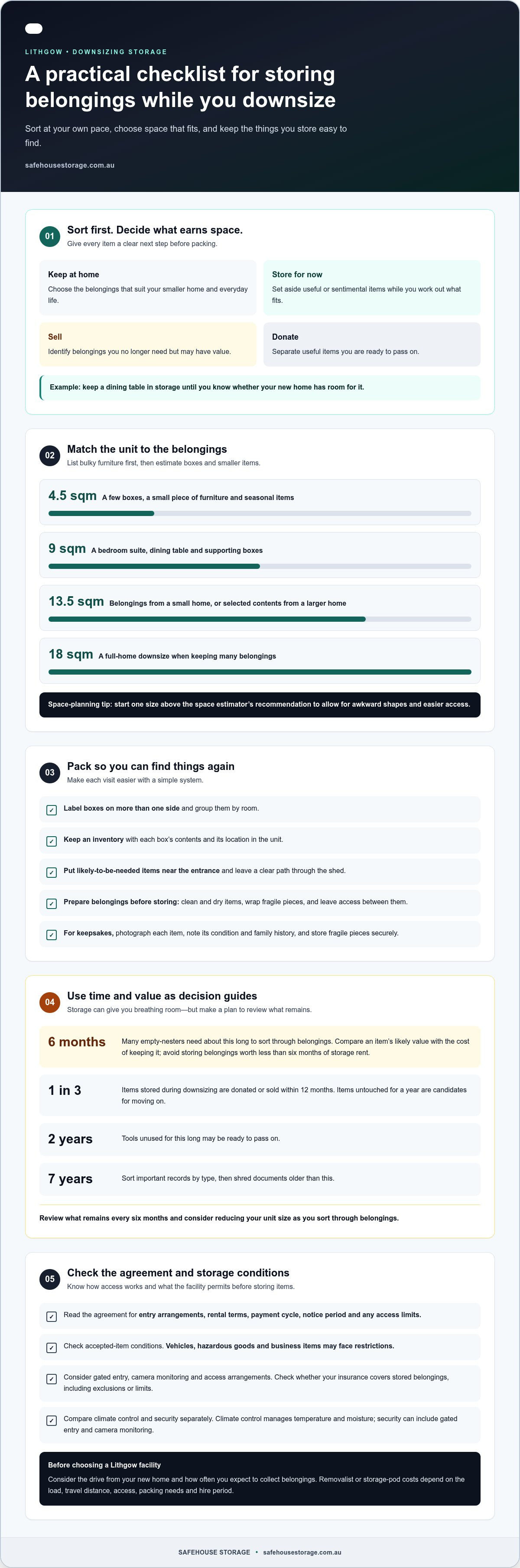
- Sort belongings into keep, store, donate and sell groups before moving, so each item has a clear next step.
- Pack sentimental or valuable possessions carefully and keep a simple inventory to make them easier to find later.
- Place items you may need soon near the front of your storage space, and group the rest by room or use.
- Match the unit size to what you plan to store: a 4.5 sqm unit can suit a few boxes, a small piece of furniture and seasonal items.
- Review what remains every six months and consider reducing your storage unit size as you sort through belongings.
Is it possible to access my stored items while downsizing for retirement?
Yes. Storage keeps belongings available while you sort, sell or donate them. Most empty-nesters typically need six months to sort through their belongings, and 1 in 3 items stored during downsizing are donated or sold within 12 months. Choose what earns space, then organise items so you can find them again.
Start by separating belongings into four groups: keep at home, store for now, sell and donate. Set aside furniture that won’t fit your new home but still has practical or sentimental value. For example, keep a dining table in storage until you know whether the smaller home has room. Items untouched for a year are candidates for moving on. Tools unused for two years may also be ready to pass on.
Compare an item’s likely value with the cost of keeping it. Avoid storing belongings worth less than six months of storage rent. Sort important records by type, then shred documents older than seven years. Keep an inventory of stored items, including each box’s contents and its location in the unit.
Choose a unit size by listing bulky furniture first, then estimating boxes and smaller items. A 4.5 sqm unit can suit a few boxes, a small piece of furniture and seasonal items. A 9 sqm unit can fit a bedroom suite, dining table and supporting boxes. For a small home’s belongings, or selected contents from a larger home, consider 13.5 sqm. An 18 sqm unit may suit a full-home downsize when keeping many belongings. Start one size above the space estimator’s recommendation to allow for awkward shapes and easier access.
Label boxes on more than one side and group them by room. Place items you may need soon near the entrance, and leave a clear path through the shed rather than stacking everything tightly. This makes it easier to reach a chair, heirloom or seasonal item without unpacking the whole space.
Rules may include Lithgow City Council requirements for land use or parking, as well as the facility’s conditions for accepted items. Vehicles, hazardous goods and business items may face restrictions, so read the storage agreement before planning to store them.
Removalist or storage-pod costs depend on the load, travel distance, access, packing needs and hire period. Ask the relevant service for a quote.
When choosing a Lithgow facility, consider gated entry, camera monitoring, access arrangements and the agreement’s security terms. Review your insurance policy to see whether stored belongings are covered, including any exclusions or limits.
Estimate space by measuring large furniture, counting boxes and grouping belongings by room before using a space estimator. Prepare items by cleaning and drying them, wrapping fragile pieces, labelling boxes and leaving access between stored belongings.
SafeHouse Storage has locations in Lithgow, Murray Bridge, Coonabarabran and Tenterfield. For a Lithgow move, its Lithgow site is the local option; the other sites are in different towns. Consider the drive from your new home and how often you expect to collect belongings.
How can storage help with downsizing for retirement?
Storage gives you time to settle into a smaller home before making final decisions about cherished belongings. It also keeps family keepsakes separate from everyday items, making both easier to manage.
Storing Sentimental and Valuable Possessions
A cedar chest, inherited china or a box of family letters may matter more than its practical use. Store selected keepsakes while you decide what fits your new home and daily life. Before packing, photograph each item, note its condition and record its family history. Group fragile pieces together, wrap them securely and keep their inventory somewhere easy to access.
Climate-Controlled and Secure Storage
Climate-controlled storage and secure storage are separate features. Climate control manages temperature and moisture, while security measures can include gated entry and camera monitoring. In Lithgow, compare these features separately against the items you plan to store. Paper photographs, wooden furniture and fabrics can be sensitive to damp conditions, so consider how the storage environment suits each item.
Self-storage keeps belongings in a shed you can access, while portable storage involves a container delivered for loading. Downsizing straight into a smaller home avoids storing items but requires decisions before the move. The practical choice depends on whether you need to reach belongings, where you can load them and how much you intend to keep.
Family memorabilia can take up less physical space when you digitise copies. Sort photographs by person, event or date, then scan or photograph them in good light. Name digital files clearly, such as “Nan’s garden, Lithgow”, rather than keeping the camera’s default file name. Save copies in separate places, such as a computer and an external drive.
Keep original prints, letters and albums that carry special meaning. Use a labelled folder or archival box, and avoid writing directly on photographs. For bulky items such as framed portraits, record the size and take a clear picture. This makes it easier to plan wall space in the smaller home before moving them.
Storage works best when you can identify each item without opening every box. Keep an inventory with the box label, contents and any handling needs. A box marked “family albums, handle flat” is more useful than one marked “miscellaneous”. Update the list whenever you retrieve or add an item.
If you’re weighing up unit sizes for keepsakes and furniture, storage unit options can help you compare the space available for your plans.
Accessing stored belongings
Read the Lithgow facility’s agreement for entry arrangements and rental terms. Check the payment cycle, notice period and any access limits before signing.
Plan each visit around a specific retrieval task. If you need a sewing machine, note its box label before leaving home, then use your inventory to locate it. A clear record saves time and reduces the chance of shifting unrelated furniture.
Keep frequently needed belongings near the front of the shed. Place occasional-use items, such as spare dining chairs, further back. Leave a clear path between the entrance and stored goods, and avoid stacking boxes where they block access to furniture or fragile items.
Group boxes by room or purpose. For example, label one group “winter clothes” and another “family photographs”. Add a short contents list to each box, and keep a matching copy on your phone or in a folder at home. Update the record whenever you remove or return something.
Before loading, make an access plan. Put items you may retrieve first near the doorway, then load larger pieces behind them. Keep heavy boxes low and lighter boxes above them. Wrap delicate belongings separately so retrieving a lamp does not mean unpacking a stack of china.
Access needs can also shape what you store. If you expect to use a bookcase during the move, position it where you can reach it without shifting packed cartons. If an item is unlikely to be needed, group it with belongings set aside for a later decision.
Ask the facility agreement to make these points clear:
- Permitted entry hours and any days when access is restricted.
- How you enter the site and unit, including key or code arrangements.
- How much notice is needed to end the rental or change unit size.
- How payments are made and what happens if a payment is missed.
- Whether access is limited during maintenance or other site work.
Keep the agreement and contact details with your inventory. If a family member will collect a keepsake, record the item and tell them where it sits in the unit. Follow the facility’s entry process, and keep your access details private.
For a visit to retrieve a single item, bring the inventory, a torch and suitable lifting help for bulky furniture. Return remaining belongings to their labelled places, then update the list. A tidy unit makes the next visit simpler and helps you keep track of possessions while settling into a smaller Lithgow home.
Entry arrangements and rental terms are set out in the facility’s agreement. Before signing, check permitted entry times, payment arrangements, notice required to end or change the rental, and any access restrictions.
Common storage needs for empty-nesters
After adult children leave home, spare bedrooms are often among the first rooms to clear. A bed, desk or bookcase may not fit the next home but could still be useful later. Sort these larger pieces separately to see how much space furniture takes before packing smaller belongings.
Seasonal items can also take up room in a smaller home. Think winter bedding, bulky coats, camping gear or decorations used for special occasions. Group each type together and decide whether you’ll need it soon. A clear list makes it easier to retrieve a particular item without searching through every carton.
Household furniture often needs a careful second look. A dining table may suit family visits but dominate a compact living area. A spare armchair might be useful in a new reading corner, while an extra cabinet could be difficult to place. Measure the room and furniture, then match pieces to the new floor plan.
Hobby equipment can be harder to sort because it reflects how you spend your time. A sewing machine, golf clubs or gardening tools may still support regular activities. Keep items tied to hobbies you plan to continue, and consider passing on equipment for interests you no longer pursue. Store related pieces together, such as sewing patterns with the machine.
Family belongings may include children’s school projects, sports trophies, musical instruments and inherited furniture. Ask family members whether they want specific items before packing them away. A labelled box of school artwork is easier to share than a mixed carton of papers, photos and household odds and ends.
Some empty-nesters also need temporary space between selling a home and settling into the next one. In that case, separate essentials from belongings that can stay packed. Keep daily-use items, medication and important documents with you rather than burying them behind furniture. This makes the move-in period easier to manage.
Use a simple room-by-room inventory to plan what goes into storage:
- Bedroom: spare bed linen, a bedside table or a child’s stored belongings.
- Living area: an occasional chair, framed artwork or a cabinet awaiting a new home.
- Garage: gardening tools, camping equipment or seasonal decorations.
- Study: archived papers, books or a desk that won’t fit the new layout.
Before packing, remove anything you won’t keep, then group the remaining items by room and purpose. Label each carton with its contents and intended destination. A box marked “garage, camping gear” is more useful than “miscellaneous”, especially when you need to find equipment before your next outing.
Keep the shed layout practical. Place furniture where it won’t block smaller cartons, and leave a route to items you may want during the transition. Revisit the inventory as your new home takes shape, so stored belongings can move from temporary holding to a clear decision.
Flexible storage contracts
A downsizing timeline can change as you settle into a smaller home. Review what remains in storage as your plans shift, and make sure the shed size and rental arrangement still suit your needs.
Before agreeing to a rental, read the terms for the billing period, payment dates, notice requirements and process for changing shed size. These details matter if your move is delayed or family members collect furniture. Keep a copy of the agreement with your moving records.
Plan a review every six months while sorting belongings. At each review, compare your inventory with what remains in the unit. If you’ve donated a spare bed and sold a cabinet, the space you need may have changed. Reducing unit size every six months can help keep the storage arrangement aligned with the remaining items.
Make each review practical. First, mark items removed since the last check. Next, identify belongings still awaiting a decision. Then estimate the space needed for those items, including room to reach them. A clear inventory makes the change easier to plan than relying on memory.
Read the agreement to understand how a shed-size change is handled. Check the notice, timing, payment adjustments and whether the replacement space suits your stored belongings. Don’t assume a smaller shed will be available exactly when you want to move. Build the review into your downsizing plan instead.
Long-term discounts or deals aren’t automatic; any offer depends on the facility’s terms. The price depends on unit size, rental period and other requirements, and is provided after a quote request.
A shorter rental may suit a gap between selling your Lithgow home and moving into the next one. A longer period may suit belongings you’re keeping while deciding what fits. In either case, note the expected move-in date and review it if settlement or renovations change your plans.
Keep contract dates beside your inventory. Add reminders for payment dates, notice deadlines and six-month reviews. If a family member collects an item, update the list straight away. These small steps help prevent forgotten belongings from staying in storage after they’re no longer needed.
Use each review to separate stored items into three groups: keep for the new home, offer to family or sell, and donate. Record the next action beside each item. For example, note that an unused sideboard is ready for sale, while a set of chairs remains useful for family visits.
Compare your downsizing timeline with the agreement before committing to a rental period. To plan the space around your changing needs, explore storage options.
SafeHouse Storage: Small Storage Units
SafeHouse Storage offers Small Storage Units, Medium Storage Units and Large Storage Units for belongings that don’t fit your next home. Choose a size around the furniture, boxes and keepsakes you plan to store, then adjust your decisions as you settle in. Its self-managed facilities are gated and camera-monitored, and you can arrange storage through an online agreement or with help from local real-estate partners.
For retirement downsizing in Lithgow, storage can give you space to make choices at your own pace. It’s a practical option for spare furniture, family belongings or seasonal items awaiting a decision. Visit safehousestorage.com.au to learn more, or contact SafeHouse Storage.
Make your next move with a clear plan
Give your downsizing decisions a clear finish line. Choose a date to review what remains in storage, then decide which belongings will move into your new home, go to family or leave your care. This simple plan can stop temporary storage from becoming a long-term holding place by default.
If you’re considering storage for downsizing a home in Lithgow, start with the items that still need a decision. Note what they are, why you’re keeping them for now and what would help you decide. A family conversation, a settled room layout or time to try your new routine may bring clarity.
When you’re ready to discuss a storage space for your belongings, contact SafeHouse Storage today. You can take the next step at your own pace and move into retirement with a plan that feels right for you.
Frequently Asked Questions
What size storage unit do I need for downsizing?
Choose a size based on the largest furniture pieces, box count and access space you need. A 4.5 sqm unit can suit a few boxes and a small furniture item; 9 sqm may fit a bedroom suite and dining table. For storage for downsizing a home in Lithgow, consider 13.5 sqm for selected household contents or 18 sqm for a full-home downsize with many belongings. Measure bulky items first.
What self-storage facilities are available in Lithgow NSW for downsizing?
SafeHouse Storage’s Lithgow facility is at 139-147 Bells Road, Lithgow NSW 2790. Its current listing says the site is full and has a waiting list, so it isn’t open for immediate new bookings. SafeHouse also lists facilities in Murray Bridge, Coonabarabran and Tenterfield. Those locations are separate options, not Lithgow sites, so factor in travel distance before deciding where stored belongings should go.
What storage unit sizes are suitable for furniture from a downsized home?
For a bedroom suite, dining table and supporting boxes, a 9 sqm space may be suitable. A 13.5 sqm space can suit selected contents from a larger home, while 18 sqm may work for a full-home downsize when keeping many belongings. Measure wardrobes, bed frames and table tops, including parts that cannot be dismantled. Leave enough room to reach furniture you may need to retrieve.


