
A lease gap can make storage part of your move, not an extra. The cost of university student storage in Tenterfield depends on the unit size, the belongings you need to store and how long you need the space. Request a quote based on your requirements.
It’s worth comparing storage costs when you’re balancing study, rent and moving plans. The right unit can also make a move between share houses or a break away from Tenterfield easier to manage.
This guide explains what affects storage costs, how to match a unit to your belongings and which items are suitable for storage. You’ll also find practical tips for storing your things between leases, during semester breaks or while you’re away.
Key Takeaways
- Estimate your storage needs by considering how much you’ll store and how long you’ll need the space.
- Match the unit size to your belongings, from a few boxes and books to larger items such as furniture.
- Sort and prepare your belongings before moving them into storage, and learn which items are suitable to store.
- Plan ahead for a lease gap, share-house move or time away so your belongings have somewhere to go between homes.
- Explore small, medium and large storage unit options to find a practical fit for your student belongings.
How much does student storage cost?
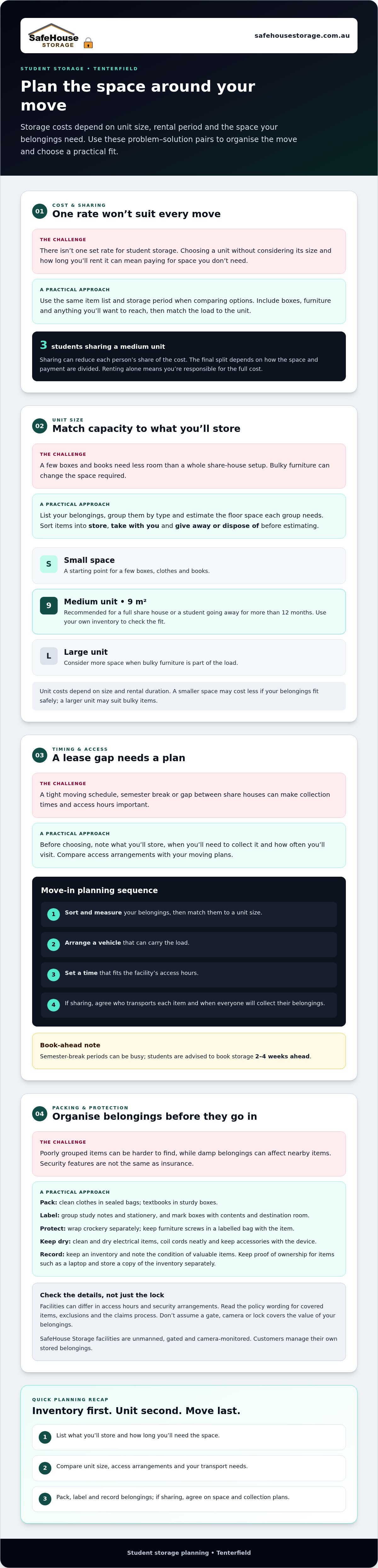
There isn’t one set rate for university student storage in Tenterfield. The cost depends on unit size, rental period and the space your belongings need. Sharing a medium unit among three students can reduce each person’s share, but the final cost depends on how you split the space and payment. If you rent a unit alone, you’re responsible for the full cost.
Student storage in Tenterfield is generally a self-storage need, not a separate university-only service. Compare unit sizes and access arrangements with your moving plans, rather than choosing based on a student label. Local transport and access needs can help you decide what suits you. SafeHouse Storage offers small, medium and large self-storage units in Tenterfield, as well as Murray Bridge, Lithgow and Coonabarabran.
Facilities can differ in access hours and security arrangements. Before choosing a space, list what you’ll store, when you need to collect it and how often you’ll visit. For example, a student storing books and clothes until a lease begins may need less frequent access than someone collecting study materials each week. Access hours matter most when your moving schedule is tight.
When comparing facilities, consider how security is managed and entry is controlled. SafeHouse Storage facilities are unmanned, gated and camera-monitored, so customers manage their own stored belongings. Security features aren’t the same as insurance: keep an inventory and record the condition of valuable items before storing them.
Insurance coverage and access terms depend on the facility and policy. Read the policy wording for covered items, exclusions and the claims process. Don’t assume a gate, camera or lock covers the value of your belongings. Keep proof of ownership for items such as a laptop, and store a copy of your inventory separately.
Pickup, delivery and transport need planning around your own move. First, sort and measure your belongings; then match them to a unit size. Next, arrange a vehicle that can carry the load and set a time that fits the facility’s access hours. If three students are sharing, agree who transports each item and when everyone will collect their belongings.
To compare costs fairly, use the same item list and storage period for each option. Include furniture, boxes and anything you’ll want to reach. A few boxes may fit in a smaller unit, while bulky furniture needs more room. Planning the load helps you avoid paying for space you don’t need.
Storage unit sizes for student belongings
Choose a storage unit based on the volume of your belongings and how long you’ll store them. List the boxes, furniture and study materials you plan to keep, then compare the space they need before reserving.
Comparing unit sizes and prices
Self storage commonly ranges from small spaces suited to clothes and books to larger units that fit furniture. A medium unit of 9 m² is recommended for a full share house or a student going away for more than 12 months. Use these examples as a starting point, then compare your own inventory with the space available.
Unit costs depend on size and rental duration. Request a quote based on your requirements. A smaller space may cost less if your belongings fit safely, while a larger unit may be more suitable for bulky items.
Choosing a unit size
Start with a written list of everything you plan on storing. Group items by type, such as boxes, a desk, a chair or a mattress. Then estimate how much floor space each group needs. International students storing only clothes and books may need less room than students moving a whole share-house setup.
Consider access as well as capacity. Keep items you’ll collect soon within easy reach instead of burying them behind furniture. Where possible, leave a clear path through the unit so you can retrieve a box without unloading everything.
Before reserving, sort belongings into three groups: store, take with you, and give away or dispose of. This can reduce the space you need. Selling a spare chair before moving, for example, may mean you don’t need a larger unit just to fit it.
Plan how you’ll pack the unit. Stack sturdy boxes together and keep heavier items low. Soft bags can fill awkward gaps, but don’t use them to underestimate how much space your belongings need. Separate fragile items from heavier furniture.
If you’re sharing a unit, agree on how much space each person needs before booking. A simple item list can prevent disagreements over room for boxes or furniture. Decide who will store bulky items and which belongings need to be collected first. This makes a shared unit easier to organise.
Reserve once you have a clear inventory and a realistic estimate of the space needed. Semester-break periods can be busy, so students are advised to book storage 2-4 weeks ahead. If your plans change, a unit size that suits your belongings and rental period can help keep the arrangement practical.
Once your inventory is ready, compare storage options against the space your belongings need.
Items students can and cannot store
Choose belongings that will remain useful and in good condition while stored. Separate everyday items from anything that could spoil, leak or create a hazard.
Items suitable for student storage
Clothes, books, study notes, kitchenware and furniture can be stored between homes. Pack clean clothes in sealed bags and put textbooks in sturdy boxes. A desk, chair or bed frame can also go into storage while you’re moving overseas or waiting for your next lease. Keep an inventory so you can find each item when you return.
Group small belongings by use to keep them organised. Pack lecture notes and stationery together, then label the box with its contents and destination room. Wrap crockery separately from heavier items. For furniture, remove loose parts where practical and keep the screws in a labelled bag with the item.
Before storing electrical items, make sure they’re clean and dry. Coil cords neatly and keep accessories with the device. Damp items can affect nearby belongings, so don’t pack them. If an item needs special care, consider whether ordinary self-storage is suitable before adding it to your load.
Prohibited storage items
Keep perishable food, rubbish, living animals and plants out of a storage unit. They can spoil, attract pests or need ongoing care. Don’t store open liquids, fuel, chemicals or other materials that could leak or create a fire risk. Read your facility agreement before packing, as it sets the rules for what you can store.
Leave out items that are wet, contaminated or likely to damage other belongings. A damp towel packed with clothes can spread moisture, while an unsealed bottle can leak onto books or furniture. Empty and clean containers before storing them, and dispose of unwanted food instead of packing it.
Use a simple sorting step before moving day:
- Store: clean clothes, books, furniture and household items you’ll use again.
- Take: medication, documents and valuables you need while away.
- Remove: food, rubbish, leaking containers and anything unsuitable under the facility agreement.
Keep passports, academic records, jewellery and essential devices with you, rather than buried among stored boxes. They’ll be easier to access, and you’ll avoid a last-minute search. If you’re leaving Tenterfield for an overseas trip, store only the belongings you genuinely need to keep. Sorting carefully keeps the unit organised and makes it easier to collect your things.
Storage between leases and share-house moves
If your lease ends before your next place is ready, you may need somewhere to keep your belongings. Storage can bridge the gap while you move between share houses, travel or leave Tenterfield for the summer.
Australian students may move between share houses 2-3 times during a degree. Each move can mean different room sizes, housemates and move-in dates. Rather than shifting every box into temporary accommodation, sort belongings into what you’ll need straight away and what can stay stored until your next lease begins.
A gap between leases from November to February is one example of when storage can help. Your belongings can stay in one place while you arrange your next room, instead of being moved repeatedly between friends’ homes or short-term stays. Make an inventory before packing and label boxes by owner and room. In a shared household, this helps everyone collect their own items later.
Timing matters around semester breaks. Students are advised to book storage 2-4 weeks before a semester-break period. That gives you time to organise transport, pack and move before your lease ends or travel begins. Set a move-out date first, then work backwards: reserve space, sort belongings, pack essentials separately, and arrange the trip to the facility.
Storage can also suit students travelling during a break. International students may need a place for belongings while away for 6-12 weeks. Keep travel essentials, passports and any items needed during the trip with you. Store only the items you won’t need until you return, such as spare bedding, kitchenware or study materials.
Your storage period may be a few weeks, the whole summer or longer. Match it to your lease dates and return plans. If your travel dates change, an organised inventory makes it easier to identify what you need to collect first. When packing, keep essentials near the unit entrance rather than behind furniture.
For a move within Tenterfield or to another town, plan transport as carefully as the storage period. Decide what you’ll carry yourself and what can remain stored. If housemates are sharing transport, agree in advance who will move each item and when. This helps prevent last-minute confusion over boxes, furniture and keys.
A simple move plan keeps each step clear:
- Write down the lease end date and next move-in date.
- Separate belongings for storage from items needed during travel.
- Book ahead of semester-break periods and arrange transport.
- Label each box so it’s easy to collect the right belongings later.
Reasons university students need storage
Student storage solves a practical problem: your belongings need somewhere to go when study, housing and travel plans don’t line up. In Tenterfield, a unit can keep furniture and study materials together while you manage a change in routine, instead of moving them repeatedly or paying to keep an empty room.
One reason is the cost of leaving a room unused during holidays. A 2023 Student Living Australia survey reported that students could save an average of A$1,500 by using self-storage instead of paying rent for empty rooms over the holidays. The useful comparison is your own rent against storage and transport costs. If you’ll be away and won’t use the room, storing selected belongings may make more sense than paying for unused space.
Semester breaks can create a gap between study periods and housing arrangements. You may need to leave a room before your next lease begins or return to a different share house. A storage unit gives your belongings a temporary home during the change. Before moving out, separate what you’ll need during the break from what can stay stored until you settle in.
International students may need storage for 4-12 weeks while overseas. That can help when a room isn’t available during travel, or when carrying furniture and household items abroad would be impractical. Keep travel documents, medication and essentials with you. Store only items you won’t need until you return, such as spare bedding, kitchenware and books.
A change in living arrangements can also make storage useful. Moving into a furnished room, for example, may leave you with a desk, chair or kitchen items that won’t fit. Instead of making rushed decisions about belongings you still use, store them until you know what your next home needs. This can also reduce what you have to move when you arrive.
Storage may be less useful if you’re taking everything with you or moving directly into a suitable home. Compare the storage period, transport effort and value of your belongings. To keep costs down, choose only the space you need and avoid storing items you no longer want. Before arranging your move, sort each item into keep, store or pass on.
To cut the hassle, make a short plan:
- Write down your departure, lease end and return dates.
- Set aside travel essentials and items needed during the semester.
- List furniture and boxes that can stay stored.
- Arrange transport and label belongings for easier collection.
If storage fits your plans, explore storage options for your student belongings.
SafeHouse Storage: Small Storage Units
SafeHouse Storage offers small, medium and large units for students storing belongings between leases, study periods or trips away. Choose a small unit for a compact set of boxes, a medium unit for more belongings, or a large unit when you need room for furniture too.
SafeHouse Storage facilities are self-managed, gated and camera-monitored. Make an inventory before arranging your unit so you can choose a size that suits what you plan to store. It’s a practical option when your next move-in date doesn’t line up with moving out.
For details about storage options, visit SafeHouse Storage online or contact the team.
Make your next move easier to plan
Before arranging storage, write down your move-out date, next address and the belongings you plan to keep. This can help you decide what needs storing and what should travel with you. It also gives you a clear starting point when comparing university student storage in Tenterfield.
SafeHouse Storage offers small, medium and large storage units. Estimate how much space your belongings need, then choose the size that fits your plans. The aim is to make the transition between study, housing and travel simpler, without adding unnecessary moving tasks.
If you’re ready to discuss your storage needs, contact SafeHouse Storage. A clear plan can make your next move feel much more manageable.
Frequently Asked Questions
Are there any items I can't store?
Yes. Don’t store perishable food, rubbish, living animals or plants in a storage unit. Leaking liquids and hazardous materials can also damage belongings or create risks. Before packing, make sure each item is clean, dry and safe to keep in an enclosed space. For example, empty food containers and clean kitchenware before boxing them, and keep essential documents or medication with you.
Are there any restrictions to what I can store?
Yes. Storage agreements set conditions for what can go into a unit, so read the terms before moving your belongings. Restrictions commonly concern items that spoil, leak, attract pests or pose a safety risk. A sealed box doesn’t make unsuitable contents acceptable. Sort your things into storage, take-with-you and discard groups, then pack only items allowed by the agreement.
Can I use my own packaging materials?
Yes, you can use packaging you already have to prepare your belongings. Choose clean, sturdy boxes that close securely, and label each one with its contents. Wrap fragile items, such as mugs or picture frames, separately. Keep boxes dry and avoid overfilling cartons that may split when lifted. SafeHouse Storage doesn’t sell packing supplies or boxes.
What are the minimum and maximum storage periods?
Student storage periods can last a few weeks, the whole summer or longer. The right duration depends on your move-out date, next lease and return plans. For example, someone waiting for a room in a new share house may need storage for less time than a student keeping belongings safe while away for summer. Choose a period that fits your plans and agreement.
What are the storage unit sizes and prices in Tenterfield?
SafeHouse Storage offers small, medium and large units. Choose based on the volume of your belongings, including furniture, boxes and anything you need to reach easily. Storage costs depend on unit size and rental period. Request a quote based on your requirements. SafeHouse Storage also has facilities in Murray Bridge, Lithgow and Coonabarabran, as well as Tenterfield.
Do Tenterfield storage facilities offer student discounts or short-term rentals?
Some self-storage facilities offer student discounts or flexible short-term rentals, which may suit a semester break, travel plans or a gap between leases. To compare options, work out how long you need storage and what you’ll keep there. Students in Tenterfield can use the same planning approach as those arranging storage in Murray Bridge, Lithgow or Coonabarabran.
What are the opening hours and access rules for storage facilities in Tenterfield?
Access arrangements depend on the facility’s terms. SafeHouse Storage operates unmanned facilities with gated access and camera monitoring, so customers manage their own stored belongings. Read the access conditions in your storage agreement and plan visits around them. Before moving day, organise your transport and pack items you may collect first near the unit entrance.
What items are prohibited or restricted in Tenterfield storage units?
Perishable food, rubbish, animals, plants and materials that could leak or create a hazard aren’t suitable for storage. Your facility agreement also sets rules for restricted items. For example, don’t pack fuel, chemicals or open liquids with clothes, books or furniture. Read the agreement before loading your vehicle, and remove unsuitable items rather than leaving them in a box.


