
What if “no lock-in” still leaves you paying after you’re ready to move out? If you’re looking for no lock in contract storage Lithgow, the agreement matters as much as the label. Minimum rental periods, notice requirements and cancellation terms can all affect when your rental ends and what you pay.
It makes sense to want storage that fits your plans, whether you need space during a move or for a longer clear-out. SafeHouse Storage offers small, medium and large self-managed units for residential and commercial use, with short-term and long-term rental options. Arrange a unit through an online agreement or with assistance from a local real-estate partner.
This guide covers the agreement details to review before signing, along with practical ways to compare unit sizes and choose storage that suits your timeframe. A clear plan can help you arrange storage in Lithgow without relying on assumptions about what “no lock-in” means.
Key Takeaways
- Moving dates, renovations, downsizing and changing business needs can all affect how long you need storage.
- For no lock in contract storage Lithgow, read the rental agreement carefully. The “no lock-in” label doesn’t replace the terms you sign.
- Compare rental length, notice, billing and access arrangements separately to see what suits your plans.
- List what you’ll store and how often you’ll need to reach it before choosing a unit size.
- SafeHouse Storage offers small, medium and large self-managed units for residential and commercial short-term or long-term storage, arranged online or through local real-estate partners.
Why No Lock-In Storage Matters for Space in Lithgow
Moving dates can shift. Renovations may take longer than planned, a household may downsize in stages, or a business may need room for stock while its workspace changes. In each case, both the amount of space needed and the rental period can change.
Flexible storage means choosing a rental arrangement that fits how you expect to use the unit. The phrase “no lock-in” doesn’t explain the agreement’s conditions. Even if you expect to rent for a short time, check how to end the rental and what notice or billing terms apply. Read those details before deciding whether the arrangement suits your timeline.
Storage can serve different purposes for households and businesses. The Self-storage industry overview gives general background on the service, but your practical decision in Lithgow comes down to what you’re storing, how often you need access and the rental terms. SafeHouse Storage offers short-term and long-term rental options, with the agreement setting the conditions for your use.
When flexible storage can help in Lithgow
A household waiting for settlement or a new lease to begin may need a place for furniture between homes. During a kitchen renovation, boxes and appliances may need to be moved out of the work area, with the storage period depending on how the project progresses. Downsizing can also happen gradually, making a unit useful while belongings are sorted and new arrangements take shape.
Local businesses can have changing space needs too. A retailer might need temporary room for stock during a busy period, while a trades business may need somewhere to store equipment during a change in work arrangements. These examples don’t come with fixed timelines. If your dates are uncertain, understand how the rental can continue or end so you can plan without assuming how long you’ll need the unit.
What renters want to avoid
The main concern is paying for a unit after it’s no longer useful. A move may finish earlier than expected, or household items may return home once renovation work wraps up. If you haven’t understood how the rental ends, it can be difficult to match the storage period to your actual need.
Unclear notice or cancellation wording can leave you unsure when to give notice, what steps to follow or when charges stop. That doesn’t make a storage agreement a problem, but it does make the written conditions important. Before choosing no lock in contract storage Lithgow, check that you understand how the terms apply if you finish early, your timeline changes or you need to stay longer.
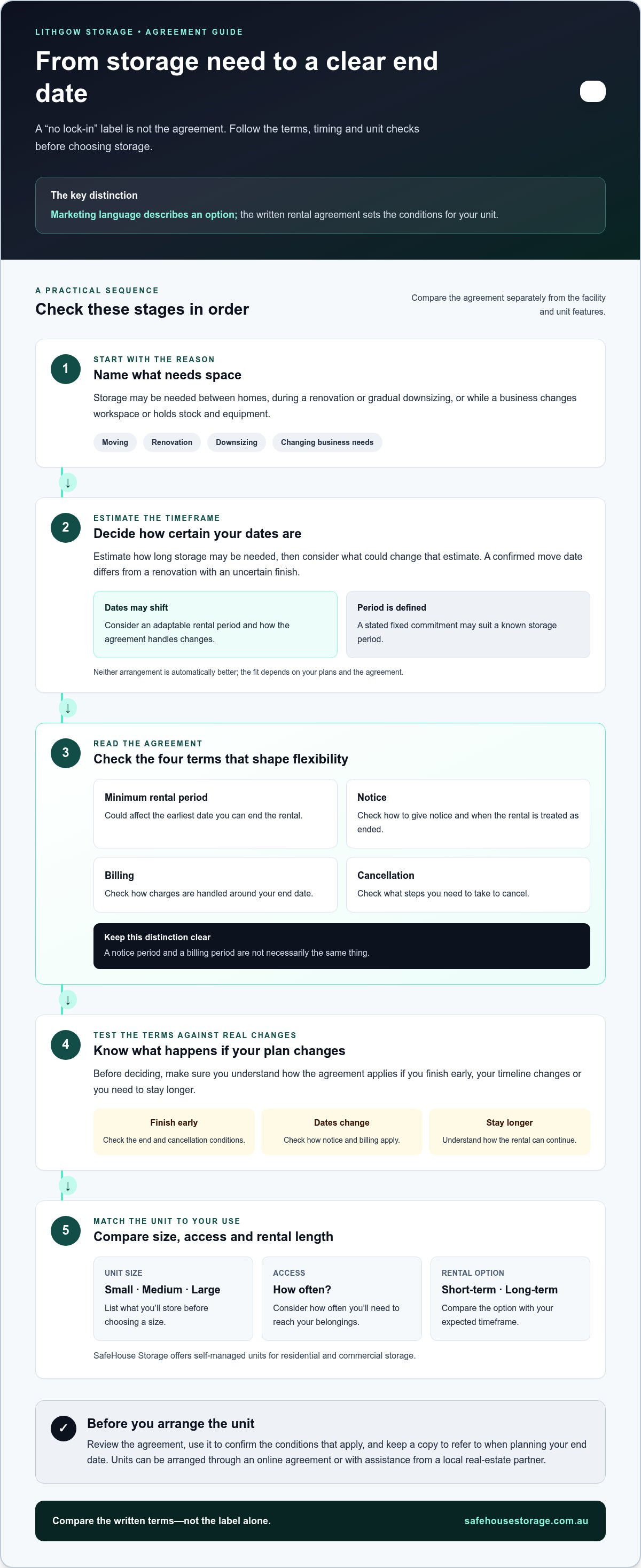
Start by estimating how long you’re likely to need storage, then consider what could change that estimate. A move with confirmed dates may call for a different plan from a renovation with an uncertain finish. With that context, compare the actual rental terms and choose a unit that fits your circumstances, rather than relying on a label alone.
What No Lock-In Storage Contracts Actually Mean
“No lock-in” usually suggests you’re not committing to a set, long-term rental period. It doesn’t mean there’s no agreement or that you can end the rental at any moment without following its conditions. Once you sign, the rental agreement sets the terms for your unit.
That distinction matters when you compare no lock in contract storage Lithgow options. A flexible arrangement may suit a short or changing need, but its practical value depends on the details: any minimum rental period, how notice works, what cancellation involves and how billing is handled. Read these clauses together rather than relying on a headline or brief description.
Marketing language describes an option; the written agreement sets the conditions.
Which agreement terms affect flexibility?
Start with the minimum rental period. If the agreement requires an initial rental period, that may affect the earliest date you can end the rental, even if you need the unit for less time. Then check the notice wording. It should explain how to give notice and when the rental is treated as ended.
Billing and cancellation terms matter too. Check how charges are handled around your end date and what steps you need to take to cancel. A notice period and a billing period aren’t necessarily the same thing. Use the agreement for the exact conditions that apply, rather than assuming that another facility’s terms or an old document applies.
Flexible rental versus a fixed commitment
An adaptable rental period may suit someone whose moving or renovation dates could shift. A stated fixed commitment may suit someone who knows storage is needed for a defined period and wants that period set out. Neither arrangement is automatically better. The right fit depends on how certain your plans are and what the agreement requires if they change.
For example, a household storing furniture while waiting for a move date may prioritise clear options if the timing changes. A business holding equipment during a planned workspace change may have a firmer end date. In either case, compare your expected use with the written minimum period, notice process and billing conditions before deciding.
For SafeHouse Storage, the rental agreement explains the conditions that apply. Review it before arranging a unit and keep a copy so you can refer to the agreed terms. That gives you a clear reference when planning an end date or working out what to do if your storage needs change.
Once you’ve identified terms that fit your timeframe, consider unit size and whether short-term or long-term storage suits your plans. Explore SafeHouse Storage options as a next step in arranging storage in Lithgow.
How to Compare Flexible Storage Options in Lithgow
A useful comparison separates the rental agreement from the facility features. A camera-monitored site may suit your preference for monitored facilities, but that feature doesn’t tell you how long you must rent or how to end the agreement. When looking for no lock in contract storage Lithgow, compare both before choosing.
Compare the agreement before comparing convenience
Use the written agreement as your reference. Note when the rental starts, how the rental period is described and what you need to do to end it. Check the billing wording alongside those details. If promotional wording differs from the agreement, base your decision on the written conditions.
This table provides a consistent way to compare options. Fill it in using the agreement and facility information, rather than relying on memory or a headline.
| What to compare | What to record |
|---|---|
| Rental term | Start date, minimum period if stated, and how the rental period continues. |
| Notice | How notice must be given and how the agreement describes the end date. |
| Billing | The billing wording and how it relates to the rental period and end date. |
| Access arrangements | What the facility information says about access, separately from the rental terms. |
| Facility features | Features such as gated entry or camera monitoring, listed separately from contract conditions. |
Don’t assume the same notice or billing arrangements apply to every facility. Record what the agreement says and note any wording you want explained before signing. That gives you a clearer comparison than a list of facility features alone.
Match rental flexibility to the storage job
Short-term storage can suit a temporary need, while long-term rental may fit belongings or business items that need a place for an ongoing period. The best fit depends on your plans and the agreement terms, not just the rental label. Consider how often you’ll need access, as that can also affect which facility arrangements work for you.
Unit size is a separate decision. SafeHouse Storage offers small, medium and large self-managed units for residential and commercial use. List the items you plan to store and think about how you’ll arrange them, then choose a size suited to the load and intended use. Avoid choosing by unit label alone; the belongings you’re storing are the practical measure.
For wider context on regional storage considerations, see this regional self-storage guide.
Compare written terms alongside location and facility features. This helps you weigh rental flexibility, practical access and unit size against the storage job you actually have.
A Practical Checklist Before Renting Storage in Lithgow
Planning ahead can make it easier to choose storage that fits your belongings and timeline. Work through these steps before arranging a unit. They’ll help you compare practical needs with the rental conditions without assuming every storage job has the same duration.
Work out what you need to store and for how long
Start with a list of household goods, furniture or business items. Note anything bulky, fragile or likely to need regular access. Estimate how long you expect to store the items and mark dates that could change, such as a move or project finish. This gives you a more useful basis for comparing small, medium and large unit options.
- Set out the storage job. Write down what you’re storing and whether you’ll need to reach particular items during the rental. For business use, include stock or equipment and how often you expect to access it.
- Estimate the likely rental period. Note your expected start and end dates. If either is uncertain, record what might shift them rather than treating an estimate as a firm date.
- Choose a unit size to suit the items. Use your list and intended use to compare small, medium and large options. Think about how the belongings will fit and whether you need to keep some items easy to reach.
- Check the facility’s location and access details. Consider how the location fits your plans and review the stated access arrangements. Keep these practical features separate from the rental agreement terms.
- Read the rental agreement. Look for the start date, rental period, minimum period if stated, notice process, cancellation wording and billing terms. Record the exact conditions that apply instead of relying on the phrase “no lock-in”.
- Compare your dates with the agreement. Check whether the written terms fit your expected storage period, including what you’d need to do if your plans change. If a condition is unclear, have its meaning explained before proceeding and use the agreement as your reference.
Read the agreement and plan your next step
Before you commit, compare the written rental conditions with the dates and access needs on your list. Don’t infer a notice period, billing schedule or cancellation process from a general description; rely on the agreement wording. If you’re planning a move, the moving storage guide for NSW can help you think through how storage fits into the move.
Once you’ve settled on the storage task and unit size, arrange a SafeHouse Storage unit online or through a local real-estate partner. Explore SafeHouse Storage units for short-term or long-term residential and commercial storage in Lithgow.
Arrange Storage with SafeHouse Storage in Lithgow
SafeHouse Storage provides self-managed storage for residential and commercial customers in Lithgow. Whether you’re making room at home, storing furniture during a move or setting aside business items, choose from small, medium and large units. Short-term and long-term rental options suit different storage needs, while the written agreement explains the conditions that apply to your rental.
Facilities are gated and camera-monitored. Consider these features alongside unit size and rental terms. They don’t replace reading the agreement or choosing an option that fits your belongings and plans.
Choose a rental pathway that suits you
Arrange storage through an online agreement or use the local real-estate partner pathway for assistance with the rental process. Either way, review the written terms before completing the rental. In particular, understand the rental period, notice, cancellation and billing wording in your agreement.
It can help to have your storage list and preferred timeframe ready before you begin. These give you a practical starting point for choosing a unit size and deciding whether short-term or long-term storage suits the job. The agreement sets out your rental conditions, so keep it as your reference.
Take the next step for Lithgow storage
If you’re weighing up no lock in contract storage Lithgow, focus on the rental conditions rather than relying on a label. Compare the agreement with your likely dates and understand what steps are required when you’re ready to end the rental. Clear terms make it easier to plan, whether your storage need is temporary or ongoing.
- List what you’re storing to help choose a unit size that fits your belongings or business items.
- Choose a likely timeframe and note any dates that could change.
- Read the rental agreement to understand the conditions that apply to your chosen unit.
Once you’ve considered those points, choose the arrangement that suits your storage task and preferred rental pathway. SafeHouse Storage offers small, medium and large units for residential and commercial use, with online agreements and local real-estate partners as ways to arrange storage.
For a straightforward next step, explore SafeHouse Storage and find a unit size that suits your plans. Review the written agreement before completing your rental so you understand the conditions you’re agreeing to.
Take the Next Step with a Clear Plan
Storage should fit the job you have now, with rental conditions you understand if your plans change. When considering no lock in contract storage Lithgow, let the written agreement guide your decision rather than relying on the label alone. A clear end-date process can help you plan around a move, a home project or changing business needs.
Before arranging a unit, keep your item list, likely dates and agreement details together. This helps you check that the unit size and rental terms match how you expect to use the space. If your timeline is uncertain, take that into account before you commit. You don’t need to predict every change; you do need to make a considered choice with the information in front of you.
SafeHouse Storage offers residential and commercial storage, with online agreements and assistance through local real-estate partners. Explore the available unit sizes and rental options, then read the agreement before completing your rental.
Explore SafeHouse Storage and take the next step towards storage that suits your plans.
Frequently Asked Questions
Can I rent a storage unit for a short period in Lithgow?
Yes, SafeHouse Storage offers short-term and long-term rentals. If you’re storing furniture between moving dates, note your likely move-in and move-out dates before choosing a unit. Then check the rental period, notice and billing wording in the agreement. This helps you judge whether no lock in contract storage Lithgow suits your plans without assuming a minimum rental period or end date.
What should I check in a storage rental agreement before signing?
Check the rental period, billing terms, notice process and wording about how the agreement ends. Compare these details with your storage dates, including what you’d do if a move or project finishes earlier than expected. Use the written agreement as your reference. If a phrase is unclear, have its meaning explained before signing rather than relying on a verbal summary.
Can businesses use SafeHouse Storage units in Lithgow?
Yes, SafeHouse Storage units are available for commercial as well as residential use. A local business might store surplus stock between trading periods or set equipment aside during a workspace change. Before choosing, list the items, consider how often you’ll need access and estimate the storage period. SafeHouse Storage also operates in Murray Bridge, Tenterfield and Coonabarabran, serving local storage needs in those communities.
How do I arrange a SafeHouse Storage unit?
Arrange a SafeHouse Storage unit through an online agreement or get assistance through a local real-estate partner. Before starting, note the items you plan to store, the unit size you’re considering and your expected rental dates. Having those details ready can make it easier to work through the agreement and check that the rental conditions fit your plans before completing the process.
Are SafeHouse Storage facilities in Lithgow staffed?
No, SafeHouse Storage facilities are unmanned, gated and camera-monitored. The storage is self-managed, so consider whether that arrangement suits how you plan to use the unit. Think about who will manage access to your belongings and how often you expect to visit. Review the facility information and agreement for applicable access details rather than assuming particular hours or on-site assistance.
How do I choose between small, medium and large storage units?
Start by listing everything you plan to store, from furniture and boxes to business stock or equipment. Consider how the items can be arranged and whether you’ll need to reach some of them regularly. Then compare the available small, medium and large options. The right size depends on your belongings and intended use, so don’t rely on the unit label alone.


