
Imagine finally hitting the road for a long weekend in the Blue Mountains, only to unzip your tent and find it's been claimed by a thick layer of grey mould. It is a heartbreaking moment that many local adventurers know too well. Dealing with the humidity and pests while storing camping gear NSW wide can feel like a losing battle against the elements. You want your gear to last, but your garage is already overflowing.
You have likely spent thousands on a quality outdoor kit. It is frustrating when your home feels like a cluttered obstacle course and you can no longer park the ute undercover. We agree that your equipment deserves better than a damp corner or a dusty shelf where vermin can get to your expensive sleeping bags. You need a setup that is organised, secure, and out of the way.
This article will help you discover how to protect your kit from the elements while reclaiming your floor space. We will preview five pro examples of how to manage your seasonal storage for maximum success. You will learn how to keep everything from swags to full 4WD setups ready for your next trip with total peace of mind.
Key Takeaways
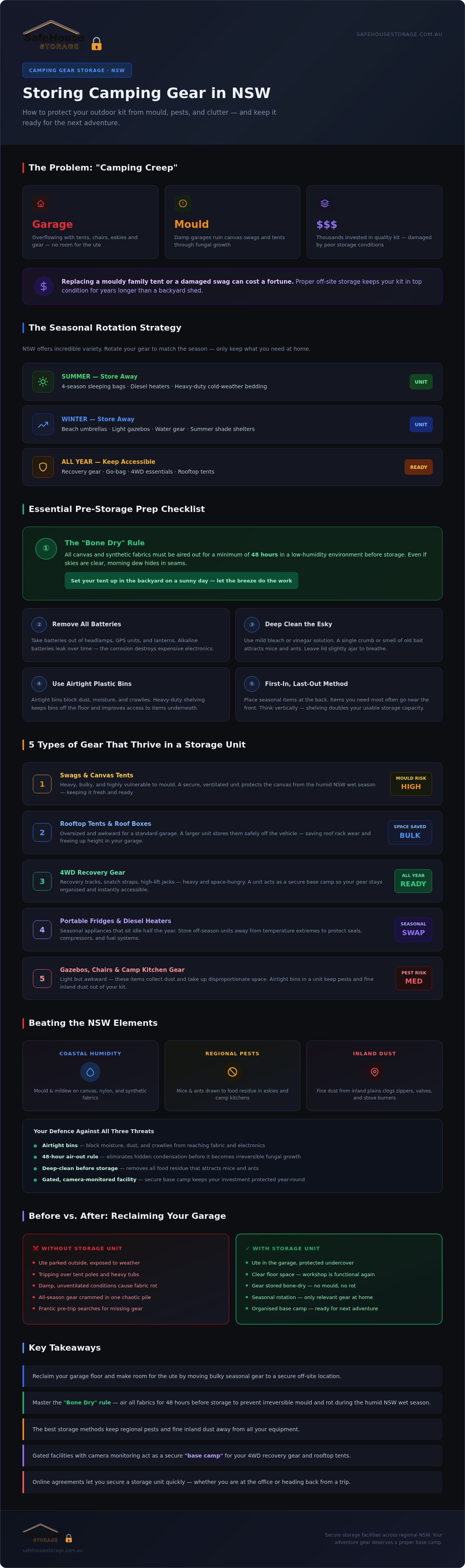
- Reclaim your garage floor and make room for the ute by moving bulky seasonal gear to a secure off-site location.
- Master the "Bone Dry" rule to prevent mould and rot from ruining your expensive swags and tents during the humid NSW wet season.
- Discover the best methods for storing camping gear NSW wide to keep regional pests and fine dust away from your equipment.
- Explore how gated facilities with camera monitoring act as a secure "base camp" for your 4WD recovery gear and rooftop tents.
- Learn how online agreements allow you to secure a unit quickly, whether you are at the office or heading back from a trip.
The Battle for Space: Why NSW Campers Need a Storage Strategy
Every Aussie camper knows how it happens. You buy a decent tent. Then you need the chairs. Next, it's the portable fridge and the recovery tracks. Before you know it, the "camping creep" has taken over your entire home. Storing camping gear NSW wide requires a plan because our weather doesn't play fair. Either you let your gear sit in a damp garage where it might rot, or you protect it in a secure unit where it stays ready for action.
Leaving your kit in a pile in the corner of the garage is a recipe for disaster. It isn't just about the mess. It's about the money. High-quality outdoor gear is a major investment. Replacing a mouldy family tent or a damaged swag can cost a fortune. Letting gear sit in a damp, unventilated space leads to fabric rot and permanent damage. Proper off-site storage keeps your kit in top condition for years longer than a backyard shed ever could. It is a simple way to preserve the life of your equipment and save your hard-earned cash.
Reclaiming Your Garage in Regional NSW
The garage should be the heart of your home's workspace. It's where you park the ute or work on weekend projects. In regional areas like Tenterfield or Lithgow, humidity and temperature swings can be extreme. Garages often lack the airflow needed to keep canvas and nylon safe from mildew. Moving bulky items like eskies, gazebos, and roof boxes to a dedicated unit changes everything. You get your workshop back. You also get the psychological win of a tidy home base where you aren't constantly tripping over tent poles or heavy plastic tubs.
The Seasonal Cycle of an NSW Camper
Our state offers incredible variety, but you don't need all your gear all the time. A winter trip to the snowy peaks near Lithgow requires heavy-duty bedding and heaters. A summer run to the coast needs light shelters and water gear. Keeping it all at home at once makes no sense. You can organise your life by rotating your gear based on the season:
- Summer: Store the thick 4-season sleeping bags and diesel heaters.
- Winter: Swap the beach umbrellas and light gazebos for your cold-weather kit.
- All Year: Keep recovery gear and the "go-bag" ready, but tuck the bulky extras away.
This rotation keeps your home functional. You only have what you need for the current trip. By using a secure unit as your "base camp," you ensure that "off-season" gear isn't just gathering dust and taking up "on-season" space. It makes the transition between trips feel effortless and keeps your gear in peak condition.
Essential Prep: How to Clean and Pack for Long-Term Storage
The secret to successful long-term storage isn't just the unit you choose. It is what you do before you lock the door. Storing camping gear NSW wide can be tricky due to our humid coastal air and dusty inland plains. If you pack away a damp tent or a dirty esky, you aren't just storing gear; you are growing a science experiment. Proper prep ensures that when the next long weekend rolls around, your kit is ready to go without a frantic trip to the shops for replacements.
Step-by-Step Gear Preparation
Your first priority is the "Bone Dry" rule. All canvas and synthetic fabrics must be aired out for 48 hours in a low-humidity environment before storage to prevent irreversible fungal growth. Even if the sky was clear when you packed up, morning dew or condensation can hide in the seams. Set your tent up in the backyard on a sunny day. Let the breeze do the work. This simple step is the difference between a fresh tent and a mouldy mess.
Don't forget the smaller details that can ruin a trip. Remove batteries from headlamps, GPS units, and lanterns. Alkaline batteries often leak over time, and the resulting corrosion can destroy expensive electronics. Give your esky a deep clean with a mild bleach solution or vinegar. Even a tiny crumb or the smell of old bait can attract regional pests like mice or ants into your storage area. Wipe down every surface and leave the lid slightly ajar to let it breathe.
Smart Packing for Small Units
When space is at a premium, you need to think vertically. Invest in some heavy-duty shelving units. This keeps your heavy plastic bins off the floor and makes it easier to reach the items at the bottom of the stack. Using airtight plastic bins is your best defence. They keep out dust, moisture, and crawlies while making your unit look like a professional workshop. If you are looking for tips on making the most of a compact space, check out this Small Storage Unit Hire: Guide for Regional NSW & SA.
Organise your unit using the "First-In, Last-Out" method. Place seasonal items like summer beach shelters at the back if it's currently winter. Label your bins by "Trip Type," such as "Weekend Bush" or "Long Haul Coast," so you can grab exactly what you need without digging. For those who need a reliable spot to keep their gear safe, finding a local storage unit is the easiest way to keep your home tidy and your kit protected.
5 Examples of Gear That Thrives in Regional Storage Units
Choosing the right space for storing camping gear NSW wide depends on your specific load. Some items are just too awkward for a standard home cupboard or a crowded garden shed. Regional storage units provide the height and depth needed for professional-grade outdoor equipment. Here are five common examples of gear that stays in better shape when kept in a dedicated unit.
Bulky Items and 4WD Equipment
Rooftop tents are a game changer for touring. However, they are heavy and increase fuel consumption when left on the ute for daily driving. Storing them off the vehicle when you aren't on a trip protects the canvas from sun damage and keeps your car efficient. Heavy-duty toolboxes, high-lift jacks, and recovery boards also take up massive amounts of floor space. If you are unsure about the best fit for your vehicle accessories, this guide on Car Storage Murray Bridge: How to Choose the Right Unit Size offers practical advice on matching gear to the right space.
The Family Adventure Load
A full family setup often includes a large 6-person tent, a heavy gazebo, and a complete kitchen kit with high-volume eskies. These items are bulky and difficult to stack safely in a home garage. A small storage unit easily fits this entire load with room to spare for folding tables and camp chairs. Keeping these items upright and organised prevents poles from bending and fabric from being pinched under other weight. For families with even more equipment, a Storage for a 2 Bedroom House: Medium Unit Guide shows how a larger space can handle extras like bikes or spare mattresses.
Seasonal Sleeping Kits and Water Gear
Swags and self-inflating mats are notoriously difficult to store at home. They should ideally be kept unrolled or loosely rolled to preserve the foam's loft and comfort. A storage unit provides the length to lay these out properly. Similarly, heavy winter bedding and thick canvas swags can be tucked away during the hotter months to save space. Finally, water sports gear like kayaks and stand-up paddleboards (SUPs) are perfect for coastal trips but a nightmare in a suburban driveway. A large unit can house these long items securely. This keeps them out of the sun and safe from theft, ensuring they are ready for your next run to the Murray River or the NSW coast.
Beating the NSW Elements: Protecting Gear from Dust and Pests
NSW weather is diverse. You might be dealing with the fine, penetrating dust of Coonabarabran one week and the damp, freezing mornings of Lithgow the next. Storing camping gear NSW wide requires more than just a roof over your head. It requires a proactive approach to keep the local environment from reclaiming your expensive kit. Without the right setup, the very elements you love to explore can become the biggest threat to your gear's lifespan.
Dust and Moisture Management
Dust is a constant battle in regional towns. It finds its way into every zipper and seam. For items like tents and swags, use breathable fabric covers rather than tight plastic wrap. This allows the material to breathe during temperature swings in the Central Tablelands, preventing trapped moisture from turning into mould. However, for smaller hard goods, airtight plastic bins are essential to keep that fine red dust at bay.
Air circulation is the key to preventing rot. Never stack your gear directly on the concrete floor. Concrete can sweat when temperatures fluctuate, leading to dampness at the bottom of your pile. Use wooden pallets or heavy-duty shelving to lift everything at least 10 centimetres off the ground. This simple gap allows air to move freely around your equipment. It is a small step that makes a massive difference in preserving the integrity of your canvas and foam mats.
Vermin Prevention in Self-Storage
Spiders and mice are the two most common uninvited guests for NSW campers. A rolled-up swag is an ideal nesting spot for a mouse, and a tent bag is a perfect hideout for a redback. The first rule is simple: never store food. Even a forgotten packet of biscuits or the scent of oil on a portable stove can attract pests. Deep clean your camp kitchen before it goes into the unit. Scrub the esky and leave it slightly open to prevent smells from lingering.
Heavy-duty, clip-lock plastic containers are your best line of defence. They are virtually impossible for mice to chew through and keep spiders from moving in. Gated facilities with camera monitoring also act as a deterrent, as these sites are generally better maintained than a standard backyard shed. If you want a secure spot that keeps the elements out, you can find a secure base camp for your gear at one of our regional facilities. Regular gated access means you can drop by for a quick check whenever you are passing through town.
SafeHouse Storage: Your Secure Base Camp in NSW
Your camping gear is more than just a collection of tents and chairs. It is your ticket to the Australian bush. Storing camping gear NSW wide requires a partner who understands the local landscape and the needs of regional adventurers. SafeHouse Storage positions its facilities in key regional hubs like Lithgow, Tenterfield, and Coonabarabran. These locations act as the perfect transit points for your trips. You can drop your gear off on the way home or pick it up as you head out to your next destination. This strategy keeps your home clutter-free while keeping your kit exactly where the action is.
Security You Can Trust
We prioritise safety without the corporate fuss. Our facilities use gated access and 24/7 camera monitoring to keep a constant eye on your investment. This provides quiet confidence that your expensive rooftop tents and 4WD accessories are protected while you are back at work. Because our sites are unmanned, you enjoy independent, self-managed access. You don't need to wait for a manager to open a gate or sign paperwork in person. You simply use your secure access and get on with your day.
To ensure everything runs smoothly, we partner with local real estate experts in each town. These partners provide the ground-level support that makes our regional presence feel like a neighborly service rather than a faceless corporation. If you have a question about your local facility, you are talking to someone who knows the area just as well as you do. It is a practical, reliable system designed for the way regional Australians live and travel.
Getting Started with Your Storage Shed
Securing your new "base camp" is a simple, no-nonsense process. You don't need to spend hours on the phone or visit an office during business hours. Our online agreements allow you to book your unit from the comfort of your home or even while you are finishing up a trip in the bush. Once you have selected your location, you can choose between small, medium, or large units. A small unit is often enough for a couple of swags and some bins. A large unit can easily handle a full family setup, including a trailer or boat.
Transitioning your gear from the ute to the unit is the final step in a successful trip. Pull up to your gated facility, unload your prepped and cleaned kit, and lock the door. Your home stays tidy, and your gear stays safe. For more details on choosing the right spot for your equipment, read our NSW & SA Regional Storage: Secure Self-Storage Guide. It is the easiest way to ensure your gear is safe, dry, and ready for whatever the next season brings.
Ready Your Kit for the Next Adventure
Managing your outdoor equipment shouldn't be a source of stress. By following the "Bone Dry" rule and using vertical shelving, you ensure your investment stays in peak condition for years. Moving your bulky tents and 4WD recovery gear to a dedicated unit does more than just protect the fabric. It gives you back your garage and simplifies your pre-trip packing routine. You can focus on the destination instead of digging through piles of dusty boxes.
SafeHouse Storage provides the perfect regional base camp for your equipment. Our gated and camera-monitored facilities offer quiet confidence that your kit is safe. With small, medium, and large units available, we have a space that fits your specific load. Whether you are prepping for a summer coastal run or a winter trip to the tablelands, storing camping gear NSW wide is easier when you have a secure, local partner.
Take the first step toward a clutter-free home and a better organised camping life. Secure your NSW camping gear storage unit online today with our fast online agreements. It's time to get your gear out of the way and back into the bush where it belongs. Happy camping.
Frequently Asked Questions
Is it safe to store a canvas tent in a storage unit in NSW?
It is safe to store a canvas tent as long as it is completely dry before you pack it away. Moisture is the enemy of canvas and can lead to permanent mould damage. You should air your tent out for at least 48 hours before storing camping gear NSW wide. Using a pallet to keep the bag off the concrete floor helps air circulate. This prevents condensation from building up during cold Lithgow nights.
What size storage unit do I need for a full family camping kit?
A small storage unit is usually enough for a standard family kit including a 6-person tent, chairs, and several storage bins. If you have bulkier items like a gazebo, a large esky, or a kayak, you might prefer a medium unit to keep things organised. This extra space allows you to use shelving and maintain a clear path to the back of your unit. It makes grabbing gear for a weekend trip much faster.
Can I store gas bottles or fuel in my storage unit?
No, you cannot store gas bottles, petrol, or any flammable liquids in your storage unit. These items are strictly prohibited for fire safety reasons and to comply with insurance regulations. You should always store your gas cylinders in a well-ventilated area at home, such as an outdoor cage or a shaded garden spot. Ensure your portable stoves and lanterns are completely empty and wiped clean before they enter the facility.
How do I prevent spiders and mice from getting into my camping gear?
The best way to keep pests away is to use heavy-duty plastic bins with clip-lock lids. These containers are much harder for mice to chew through than cardboard boxes or fabric bags. You must also ensure every piece of gear is scrubbed clean of food residue. Even the faint smell of a BBQ can attract vermin. Avoid using cardboard boxes, as spiders often use the gaps in the flaps as nesting sites during the off-season.
Are SafeHouse Storage facilities in NSW gated and monitored?
Yes, all SafeHouse Storage facilities in NSW are fully gated and feature 24/7 camera monitoring. This provides a high level of security for your expensive outdoor kit. While our facilities are unmanned for your convenience, the cameras and secure perimeter ensure that only authorised customers can enter the site. This setup gives you peace of mind that your gear is protected while you are busy planning your next adventure in the bush.
How do I book a storage unit in Lithgow or Tenterfield?
Booking a unit in Lithgow or Tenterfield is a straightforward process that you can complete online. You simply visit our website, select your preferred location, and sign the digital agreement. This allows you to secure your space instantly without visiting an office. Alternatively, you can contact our local real estate partners in each town. They manage the day-to-day support for our regional facilities and can help you choose the right size for your needs.
Do I need to insure my camping gear while it is in storage?
Yes, you are responsible for insuring your camping gear while it is in storage. Most self-storage facilities do not provide automatic cover for your belongings. You should check with your current home and contents insurer to see if your policy extends to items kept off-site. Having a specific policy for your 4WD accessories and camping kit ensures you are covered for theft or damage. It is a simple way to protect your investment.
Can I access my gear at any time for a last-minute camping trip?
You can access your gear whenever you need it thanks to our secure gated system. Because our facilities are unmanned and self-managed, you aren't restricted by traditional business hours. This is perfect for those last-minute Friday afternoon decisions to head out to the coast or the mountains. Just use your personal access code to enter the site, load up the ute, and hit the road. It makes storing camping gear NSW wide feel effortless.


