

Tool storage is about more than clearing space in your ute. For tradie tool storage in Coonabarabran, sheds can suit tools, trade stock and job equipment that fit and can be stored safely. The main considerations are the size of your gear and whether it needs conditions a storage shed cannot provide.
It makes sense to want a secure spot for valuable tools, without losing time travelling across town or committing to storage for longer than you need. This guide explains what equipment may suit storage, what to consider for bulky items and how security measures can help protect stored gear. You’ll also learn what to look for in rental terms and how to find a location that works for your home, workshop or regular jobs. That way, you can plan a practical setup before moving equipment in.
Key Takeaways
- Match the unit size to your tools, materials and equipment, and plan how you’ll load and arrange bulky gear.
- Think about what needs secure storage and how gated access and camera monitoring can support site security.
- Understand the rental terms that affect how long you can keep a unit and when you can move your gear.
- Compare the trip from home, work and regular job locations to find a practical spot for storing equipment.
- SafeHouse Storage offers small, medium and large units, giving you options to consider for different storage loads.
What can I store in a tradie unit?
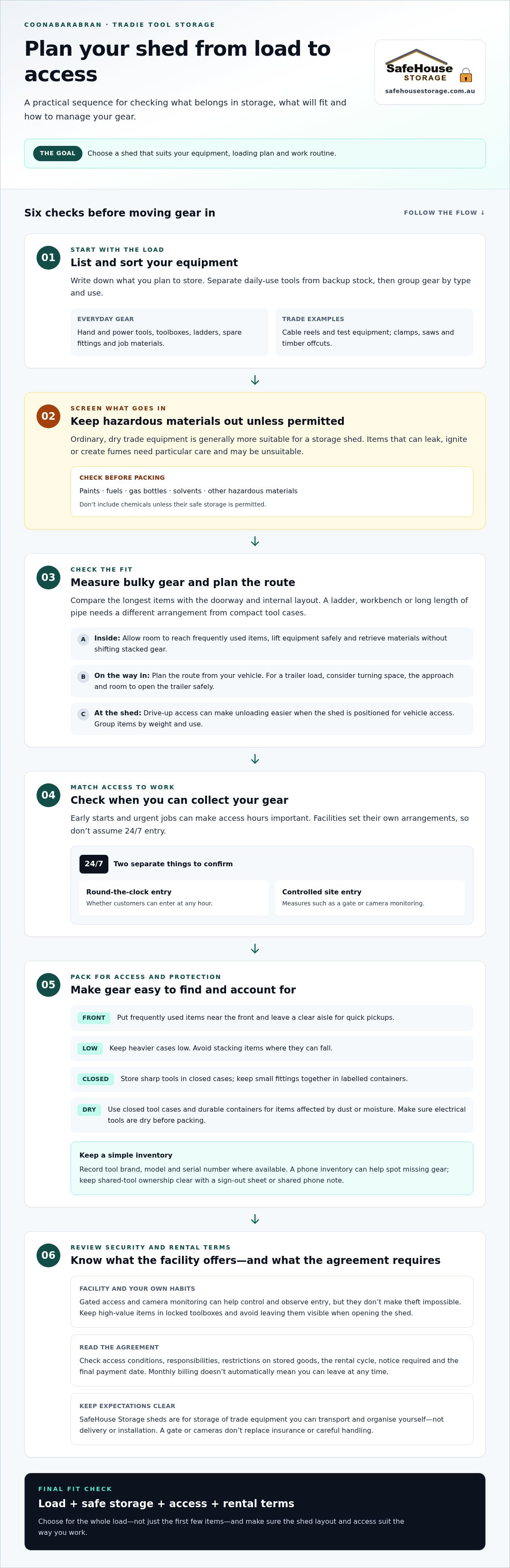
A shed may suit everyday gear such as hand and power tools, toolboxes, ladders, spare fittings and job materials. An electrician might group cable reels and test equipment, while a carpenter stores clamps, saws and timber offcuts. The shed’s size and layout determine what fits.
Start by listing the equipment you want to store. Separate daily-use tools from backup stock, then measure bulky items such as ladders, workbenches and long lengths of pipe. Allow room to reach frequently used items without unloading everything else. A clear aisle makes quick pickups easier.
Ordinary, dry trade equipment is generally more suitable for storage than items that can leak, ignite or create fumes. Paints, fuels, gas bottles, solvents and other hazardous materials need particular care and may be unsuitable for a storage shed. Don’t include chemicals unless their safe storage is permitted.
Drive-up access can simplify loading when a shed is positioned for vehicle access. A ute carrying boxed tools is easier to unload close to the door than across a long walk. Before moving equipment, plan the route from your vehicle to the shed and group items by weight and use.
For a trailer load, consider turning space, the approach to the shed and room to open the trailer safely. Long ladders or lengths of conduit need a different arrangement from compact tool cases. Measure the longest item and compare it with the doorway and internal layout.
Access hours affect how well storage fits a tradie’s work schedule. A plumber finishing an urgent call or a builder preparing for an early start may need tools outside ordinary business hours. Facilities set their own access arrangements, so 24/7 entry should never be assumed.
Secure 24/7 access means both round-the-clock entry and controlled entry to the site. Those are separate features. A gate or camera monitoring may help protect a facility, but it doesn’t establish that customers can enter at any hour. Match access arrangements to when you actually collect equipment.
Before packing, put frequently used items near the front and heavier cases lower down. Store sharp tools in closed cases, and keep small fittings together in labelled containers. A simple inventory on your phone can help you spot missing gear before leaving for a job.
Choose a shed to suit the whole load, not just the first few items. A compact toolbox may fit easily, while stock, ladders and a compressor take more floor space. Leave room to lift equipment safely and retrieve materials without shifting stacked gear at every visit.
For tradie tool storage in Coonabarabran, the practical fit depends on what you’re storing, how you’ll load it and when you need access. Sort equipment by type, remove hazardous items from the planned load, then compare the shed’s size and access with your work routine.
Is my equipment safe from theft?
SafeHouse Storage provides sheds in Coonabarabran for trade equipment you can transport and organise yourself, such as tool cases, spare fittings and boxed materials. The sheds are for storage, not delivery or installation. Choose a size that suits the load and your access needs.
Security depends on both the facility and your own habits. Gated access and camera monitoring can help control and observe entry, but they don’t make theft impossible. Keep high-value items in locked toolboxes, and avoid leaving them visible when you open the shed.
Before storing equipment, make a simple inventory on your phone. Note each tool’s brand, model and serial number where available. Photograph a cordless drill, battery and charger together, for example. Clear records help identify what belongs to you and spot missing gear sooner.
Organise the shed so tools are easy to account for. Group similar items, label cases and keep small fittings in closed containers. Store heavier equipment low and avoid stacking items where they can fall. A clear layout makes it easier to notice if a case has been moved.
Shared tools need clear ownership. If apprentices use the same impact driver or testing kit, record who has taken it and when it returns. A sign-out sheet or shared phone note can prevent mix-ups. Keep personal tools separate from crew equipment, especially when several people access the same unit.
Rental terms matter when you store valuable tools. Read the agreement for access conditions, responsibilities and restrictions on stored goods. Keep your insurance details and equipment records together. Don’t assume a facility’s gate or cameras replace insurance or careful handling of your gear.
For weather protection, use closed tool cases and durable containers for materials that could be affected by dust or moisture. Make sure electrical tools are dry before packing them, and don’t store wet gear beside metal fittings. Check items when you retrieve them, particularly after they’ve been stored for a while.
Choose tool storage by considering access controls, shed condition and protection from the elements. A gated, camera-monitored facility provides visible security measures, while sealed cases help protect individual tools. Match the shed size to your equipment so cases aren’t left outside or packed in a way that could damage them.
For a practical next step, compare secure storage options with your equipment list and work routine. Keep an inventory, organise shared gear, and store tools in closed cases. These habits make it simpler to manage equipment and notice when something needs attention.
Is there a minimum rental period?
The minimum rental period is set by the storage agreement. Month-to-month rentals can suit a tradie storing gear between jobs, but monthly billing doesn’t automatically mean you can leave at any time. The agreement defines the rental cycle, notice required and final payment date. Read those terms before moving tools into a unit.
For a short project, work backwards from the date you expect to clear the shed. A roofer holding spare materials during a renovation, for example, may need storage only until the site is finished. If the project runs over, the next rental period and any notice deadline could affect when the agreement ends.
Storage facilities may describe flexible terms differently. One agreement might renew by rental period, while another may require notice before a stated date. Look for the start date, renewal process and how to give notice. If the agreement uses terms such as “calendar month” or “rental month”, check which dates those terms cover.
Before signing, check these details in order:
- Minimum stay: Find the shortest period covered by the agreement.
- Renewal: See whether the rental continues automatically.
- Notice: Note how and when you must notify the facility.
- Final account: Check which charges apply up to the end date.
- Vacating: Confirm when the unit must be empty and left clean.
A clear rental arrangement can help when work changes. A builder may finish one job early, then need storage again later for equipment. Keep a record of your start date, renewal dates and notice deadline so you can plan either move. Add reminders to your phone alongside project handover dates.
Also consider what happens if a job is delayed. If you’re storing a compressor, tool cases and boxed fittings, moving everything twice can take time away from paid work. Understanding the renewal process helps you manage continued storage, while a notice requirement gives you a date to plan around.
Consider how predictable your work is. A fixed renovation with a known handover may suit a defined rental period. Seasonal work or changing job locations may make a shorter rental arrangement more practical, if the agreement allows it. Match the rental cycle to your likely storage needs, not just the first job on your calendar.
Keep a copy of the signed agreement and any notice you send. Record the date, method and recipient, then save the response with your storage notes. These simple steps make the end of a rental easier to organise and help avoid confusion about when to remove your tools.
Finding storage near home or work
Start your search with the places you travel most: home, your workshop and regular job areas around Coonabarabran. A shed close to your usual route can save a detour when collecting equipment. Plot those locations on a map, then compare the trip to each facility at the times you normally drive.
Include Dubbo, Tamworth and other regional towns in your search if you work there. A facility in another town may suit equipment used on jobs there, but could add travel when you need gear in Coonabarabran. Compare the location with your work pattern before choosing.
Think about the full trip, not just the distance between two map pins. Consider your usual starting point, the roads you take and whether a storage stop fits before or after a job. A shed near your workshop may be convenient for morning loading, while one nearer home could suit equipment you collect less often.
Make a shortlist using the same details for each location. Record the address, access arrangements, shed size options and how each facility fits your route. Compare the options with your actual week, including jobs outside town and days when you carry a trailer.
- Home: Does the location add a separate trip before work?
- Workshop: Can you collect equipment while preparing for a job?
- Job sites: Does the facility sit near places you visit regularly?
- Vehicle: Is the approach practical for your ute or trailer?
- Access: Do the entry arrangements match your work hours?
Use a typical work week as your test. Mark the jobs you visit most often, then note which storage location would make collection easiest. A plumber travelling between Coonabarabran jobs may prefer a different location from a tradie who regularly heads towards Dubbo or Tamworth.
Storage close to home can help keep work gear out of household space. A location near work may reduce loading time when tools change between jobs. Compare both options with the items you store, how often you collect them and where your next projects are based.
Before choosing a location, compare the shed size with your equipment list and consider how you’ll load it. A few tool cases need less space than materials and bulky equipment. The right location is the one that fits your work routes, vehicle and storage load.
Secure tool and equipment storage
Secure storage works best as a set of layers, not one feature. A gated entrance can limit vehicle access, while cameras help monitor activity around a facility. Your own shed lock and careful routines add another layer. No single measure removes every risk, so consider the site and your equipment together.
Start with the value and role of each item. A diagnostic scanner or specialist power tool may be harder to replace than common hand tools. Keep essential gear in a locked case inside the shed, and store less valuable items separately. That way, a quick visit doesn’t expose every piece of equipment.
Consider the whole entry process when choosing storage. Check how the gate is controlled, whether the shed area is monitored and how you’ll secure your own door. A camera can record activity, but it doesn’t prevent every incident. Treat it as one part of a wider security plan.
Think about what can be seen during loading. Keep expensive equipment out of public view where practical, and avoid leaving a shed open while you organise the load. Bring the next item to the doorway before opening up, then close and lock the shed once loading is finished.
Protect equipment from damage as well as theft. Put clean, dry tools in closed cases, cover cutting edges and separate metal fittings from delicate instruments. For example, store a laser level in its fitted case rather than loose beside heavy pipe fittings. A tidy load is easier to inspect.
Make access deliberate. Limit who holds a key or entry details, and tell each authorised worker how to lock up after collecting gear. If an apprentice borrows a specialised tool, record its return in the crew’s shared job notes. Clear responsibility helps prevent misplaced equipment being mistaken for theft.
Before storing high-value items, keep proof of ownership somewhere separate. Save purchase records, serial numbers and clear photographs in a secure digital folder. Review your insurance documents too, so you understand how stored business equipment is treated. Facility security measures and insurance serve different purposes.
Use this quick site review during your decision:
- Entry: Identify how vehicles and people enter the facility.
- Monitoring: Note which areas cameras cover.
- Unit: Check the door, latch and your own lock.
- Routine: Plan who can access the gear and how they secure it.
Choose the unit size that lets you store equipment without blocking access or forcing unsafe stacks. Then explore secure storage options and compare the facility’s access controls with your work routine. The clearest takeaway is simple: combine site security, a sound lock, organised storage and controlled access.
SafeHouse Storage: Small Storage Units
SafeHouse Storage offers Small Storage Units for tradies who need a place for a manageable load of tools and equipment. If your gear takes more room, Medium Storage Units and Large Storage Units provide other size options. Sort your equipment by type, then choose a unit size that suits the load and leaves room to access items.
SafeHouse Storage’s Coonabarabran facility is gated and camera-monitored, with self-managed sheds. Book a shed online using a storage agreement, which is sent to the local agent for countersignature. Consider storage when equipment is taking up space at home or in the workshop, or when you need to keep job gear organised between projects.
To discuss storage for your tools in Coonabarabran, contact SafeHouse Storage or visit safehousestorage.com.au.
Make storage part of your next job plan
Before your next project, set aside a few minutes to decide which gear needs to stay close at hand and which can be stored between jobs. That small planning step can make your work setup easier to manage as jobs and equipment change. For tradie tool storage in Coonabarabran, choose a unit size around the load you need to store, not the gear you might buy later.
SafeHouse Storage offers Small, Medium and Large Storage Units. Consider which size best suits your equipment and how you want to organise it. A clear plan gives you a practical starting point, whether you’re storing a compact set of tools or a larger work load.
Contact SafeHouse Storage today to take the next step. You can make a storage plan that fits the way you work and get your gear organised for the jobs ahead.
Frequently Asked Questions
Are there any restrictions on what I can store?
The storage agreement and safe handling needs determine what belongs in a shed. Tools, toolboxes and contained trade materials are practical examples. Don’t pack equipment while it’s wet, or store items that could leak or create fumes beside other gear. Sort the load and read the agreement’s restrictions before moving in. This helps separate everyday job equipment from goods that need different storage conditions.
How is pricing calculated?
Price depends on the case and is given after a quote request. The main factors are the unit size you need, the storage location and the rental period. For example, a tradie storing a few tool cases in Coonabarabran may need a different unit from someone storing bulkier equipment in Lithgow, Tenterfield or Murray Bridge. Prepare an inventory and estimate how long you’ll need storage to help define your requirements.


