

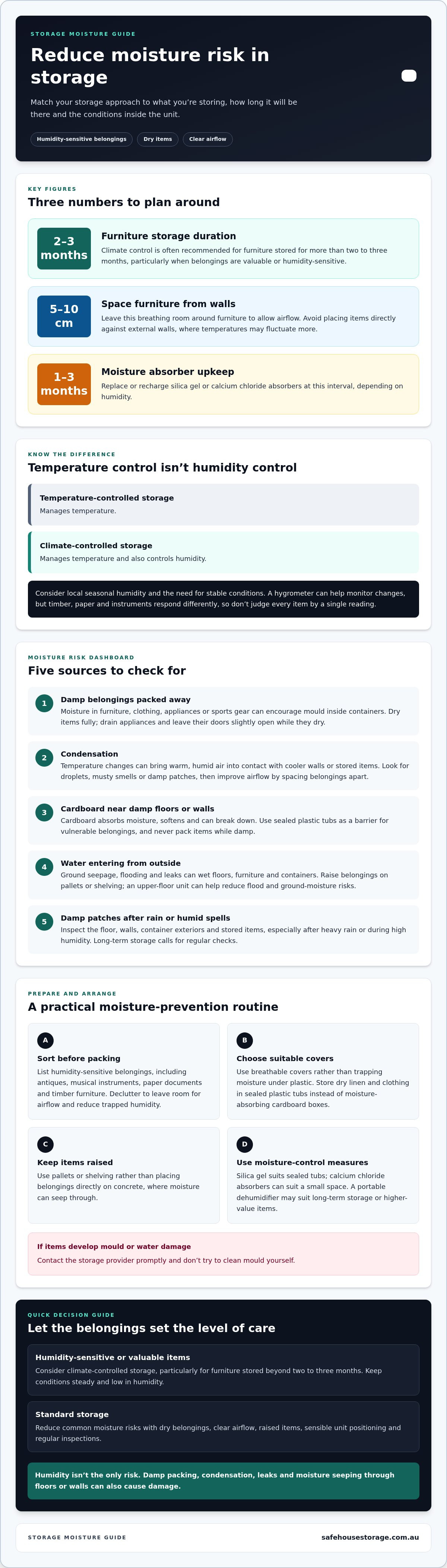
Climate control can reduce moisture risk, but it isn’t the only factor. To prevent moisture damage in a storage unit, consider whether humidity could affect the belongings you plan to store. Temperature-controlled storage manages temperature, while climate-controlled storage also manages humidity. Climate control is often recommended for furniture stored for more than two to three months.
It’s sensible to consider dampness when storing furniture, clothing, documents or other moisture-sensitive items. Humidity is not the only source of trouble: belongings packed away damp, condensation, and moisture seeping through floors or walls can also cause damage.
This guide explains when climate control may be worthwhile and how to reduce moisture risks in storage. Learn how to prepare belongings, arrange them to allow airflow, and spot common sources of dampness so you can choose an approach that suits what you’re storing and for how long.
Key Takeaways
- Climate-controlled storage can suit humidity-sensitive belongings, especially when furniture will be stored for more than two to three months.
- Sort and declutter before packing to make room for airflow and avoid trapping dampness among tightly packed items.
- Look beyond humid air: belongings packed while damp, condensation and moisture seeping from floors or walls can all contribute to damage.
- Store only dry items, leave breathing room around furniture and raise belongings off the floor to reduce common moisture risks.
Climate-Controlled Storage: Is It Worth It?
Use these steps to weigh humidity control against practical ways to reduce dampness. The right approach depends on your belongings, storage period and unit conditions.
-
Identify humidity-sensitive belongings
List humidity-sensitive belongings before packing. Antiques, musical instruments, paper documents and timber furniture can be affected by damp conditions. Declutter first: fewer tightly packed items leave room for airflow and reduce trapped humidity. Dry everything fully, then use breathable covers rather than trapping moisture under plastic. Store dry linen and clothing in sealed plastic tubs instead of moisture-absorbing cardboard boxes.
-
Consider climate-controlled storage
Consider climate-controlled storage for valuable or humidity-sensitive belongings, especially furniture stored for more than two to three months. Temperature-controlled storage manages temperature, while climate-controlled storage also controls humidity. In Australia, consider local seasonal humidity and the need for stable conditions when choosing how to store your belongings. Keep humidity steady and low, and use a hygrometer to monitor changes. Timber, paper and instruments respond differently, so don’t rely on a single reading to assess every item.
-
Choose a suitable unit location
Select an upper-floor unit to help reduce flood and ground-moisture risks, and avoid positions beside external walls where temperatures may fluctuate more. Keep furniture 5 to 10 centimetres from walls to allow airflow. Raise stored items on pallets or shelving rather than placing them directly on concrete, where moisture can seep through. These steps also help if you use standard rather than climate-controlled storage.
-
Choose moisture-control measures
Use silica gel in sealed tubs or calcium chloride moisture absorbers in a small space. Replace or recharge absorbers every one to three months, depending on humidity. A portable dehumidifier may suit long-term storage or higher-value items. To help prevent moisture damage in a storage unit, combine these measures with dry belongings and clear airflow. If items develop mould or water damage, contact the storage provider promptly and don’t try to clean mould yourself.
Sources of moisture in storage units
For wet-season, coastal-humidity or flood preparation in Australia, pack only dry belongings, seal vulnerable items in plastic containers and raise them off the floor. After heavy rain or during high humidity, inspect the unit for damp patches, leaks and condensation.
- Dry items before moving them into storage. Moisture trapped in furniture, clothing, appliances or sports gear can encourage mould inside containers. Drain appliances and leave their doors slightly open while they dry, so air can circulate.
- Check for condensation caused by temperature changes. Warm, humid air meeting cooler walls or stored items can leave moisture on surfaces. Look for water droplets, musty smells or damp patches, then improve airflow by spacing belongings apart.
- Keep cardboard away from damp floors and walls. Cardboard absorbs moisture, softens and can break down around stored items. Use sealed plastic tubs for belongings that need a barrier, and never pack them while damp.
- Look for water entering from outside. Ground seepage, flooding and leaks can wet floors, furniture and containers. Raise belongings on pallets, and choose an upper-floor unit where possible to reduce exposure to ground moisture.
- Inspect the unit after heavy rain and during humid spells. Check the floor, walls, container exteriors and stored items for signs of dampness. Long-term storage calls for regular checks, because a small leak or rising humidity can affect cardboard and furniture over time.
For belongings that need a different amount of space, compare storage unit options as part of planning what to store and how to arrange it.
SafeHouse Storage: Small Storage Units
SafeHouse Storage offers small, medium and large self-storage units for belongings that need a separate place while you move, renovate or make room at home. Choose a size that suits what you plan to store, then leave airflow around furniture and keep items raised off the floor. SafeHouse Storage has facilities in Murray Bridge, Tenterfield, Lithgow and Coonabarabran.
For items that need humidity control, follow the moisture-prevention steps above as you prepare and organise your belongings.
Visit safehousestorage.com.au to explore storage options.
Make your storage plan work for you
Before storing anything, decide what you may need to reach first and what can stay packed away. Keep a simple inventory on your phone, grouped by room or item type. That makes it easier to find belongings without shifting everything around and helps you notice changes when you next visit.
Preventing moisture damage in a storage unit also starts with matching your storage approach to the items. Separate belongings that need extra care from everyday household goods, and note any changes in their condition. Small, regular checks can help you act early if you spot a concern.
If you’re deciding what size space suits your belongings, SafeHouse Storage offers Small Storage Units, Medium Storage Units and Large Storage Units. Contact SafeHouse Storage for help choosing a practical next step for your storage needs.
With a clear plan, you can store belongings with more confidence and make your next move easier to manage.


