

What if the best defence against pests in a storage unit starts before the door closes? A clean, dry and well-packed load can make it harder for rodents and insects to find food or nesting material. That’s the heart of practical storage unit pests prevention.
It’s understandable to worry about damage, especially when belongings will sit undisturbed and regional weather and pest activity can vary. You don’t need an elaborate plan. A repeatable routine can help you prepare items carefully and notice possible problems early.
This guide covers what to clean, dry and seal before storage, how to arrange belongings for easier checks, and what signs of pest activity to look for during visits. You’ll also learn how to respond if you spot something and set realistic expectations for regional self-storage. SafeHouse Storage offers self-managed small, medium and large units in Murray Bridge, Tenterfield, Lithgow and Coonabarabran. Facilities are gated and camera-monitored for security. Pest prevention starts with careful preparation and regular checks of your belongings.
Key Takeaways
- Good storage unit pests prevention starts by limiting food, moisture and places where pests can shelter. Some environmental conditions remain outside your control.
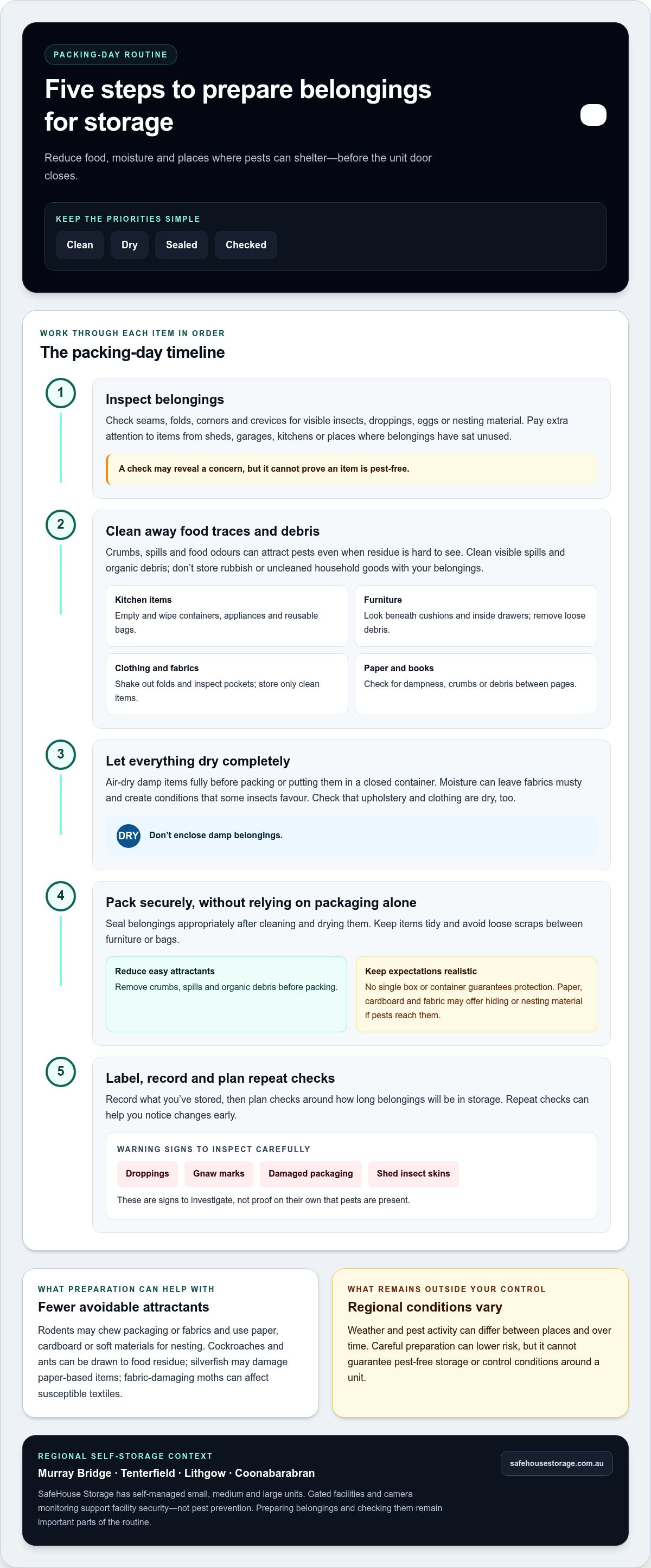
- Follow a simple packing-day order: inspect belongings, clean them, let them dry fully, pack securely, then label and record what you’ve stored.
- Droppings, gnaw marks, damaged packaging and shed insect skins can be warning signs. Inspect carefully before deciding what they mean.
- Plan repeat checks around how long your belongings will be stored, so possible changes don’t go unnoticed.
- Build a prevention routine that works for regional self-storage in Murray Bridge, Tenterfield, Lithgow and Coonabarabran.
Storage unit pest prevention starts before you pack
Storage unit pest prevention means reducing food, moisture and opportunities for pests to get into or shelter among your belongings. The aim is to make items less attractive and less suitable for pests, not to create a perfect barrier. Careful preparation can lower the risk of problems, but it can’t guarantee pest-free storage. Pests may also come from the surrounding environment, which renters can’t fully control.
Which pests can affect stored belongings?
Different pests create different concerns, and not every pest will be present at every regional facility. Rodents may chew packaging or fabrics and use paper, cardboard or soft materials for nesting. Cockroaches and ants can be drawn to food residue, while silverfish may damage paper-based items. Fabric-damaging moths can affect susceptible textiles. Some pests mainly raise contamination concerns; others may chew, stain or weaken belongings. For a broad overview of prevention approaches, see Pest Control Methods.
Why clean, dry belongings matter
Crumbs, spills and food odours can attract unwanted pests, even when residue isn’t obvious. Check seams, folds and crevices in furniture, bags and appliances. Damp items also need attention: moisture can leave fabrics musty and create conditions that some insects favour. Clean belongings thoroughly, then let them dry completely before packing. These basics matter for furniture too, alongside the other steps in this long-term furniture storage guide.
Check each item deliberately rather than relying on a general tidy-up. Focus on belongings that have been in sheds, garages or kitchens, where dust, food traces or dampness may be less obvious. Clean visible spills and debris before packing, and let damp items air-dry fully before putting them in a closed container.
- Kitchen items: Empty and wipe containers, appliances and reusable bags. Check for crumbs or food residue.
- Furniture: Look beneath cushions and inside drawers. Remove loose debris and check that upholstery is dry.
- Clothing and fabrics: Store only clean, fully dry items. Shake out folds and inspect pockets.
- Paper and books: Check for dampness, crumbs or debris between pages before packing.
These checks help you remove easy attractants and spot concerns while items are still accessible. They don’t mean pests are present. A clean, dry start makes packing decisions easier and gives you a clear sense of your belongings’ condition before storage.
What attracts pests to a storage unit, and how can you reduce it?
Pests look for basic things: food, moisture and places to shelter. For storage unit pests prevention, focus on what you can control inside your belongings and packing routine. Remove crumbs, spills and organic debris, dry items thoroughly, and limit hiding spots. You can’t control every condition outside a unit, such as local weather or pest activity around the facility.
Food residue, dampness and nesting material
An item can look clean but still carry traces that attract pests. Crumbs inside an appliance, food residue in a reusable container or scraps in a bag are easy to miss. Damp fabric and organic debris can also create odours or a more inviting place to shelter. Don’t store rubbish or uncleaned household goods alongside your belongings. Clean and dry items before packing, and don’t assume that one type of box or container guarantees protection.
Cardboard, paper and fabric may provide hiding or nesting material if pests reach them. Keep stored items tidy and avoid leaving loose scraps between furniture or bags. If you store pest products, follow their labels and handle them safely. The US EPA’s EPA Guidelines for Storing Pesticides offer general guidance on pesticide storage, but aren’t a substitute for Australian product directions.
How pests may reach stored items
Pests can arrive with belongings or packaging, especially if items have been stored outdoors or in a shed. Before packing, check seams, folds and corners for visible insects, droppings, eggs or nesting material. Pay extra attention to items that have sat unused for a while. A check can’t prove an item is pest-free, but it may reveal a concern before the item is packed with other belongings.
Regional conditions vary across New South Wales and South Australia. Weather and pest activity can differ between places and over time, so don’t assume one seasonal pattern applies everywhere. Focus on steps you can repeat rather than trying to predict every change outside your control.
Keep the four priorities simple: clean, dry, sealed and checked. Clean away food traces and debris. Dry items fully before enclosing them. Seal belongings appropriately without relying on packaging alone. Check stored items again during the storage period. This routine reduces avoidable attractants, while regular checks can help you notice changes early.
SafeHouse Storage has self-managed small, medium and large units in regional locations. The gated facilities and camera monitoring support facility security, not pest prevention, so preparing belongings remains an important part of your routine. If you’re planning regional storage, explore SafeHouse Storage unit options alongside your packing plan.
A storage unit pest prevention checklist for packing day
A calm, step-by-step routine makes packing day easier and helps you catch problems before belongings enter the unit. For storage unit pests prevention, work through each item in order: inspect, clean, dry, pack securely, then label and record. Don’t pack food, rubbish or belongings with visible pest activity.
Clean and inspect belongings before storage
Check furniture, appliances, clothing and boxes in good light. Look inside drawers and appliance cavities, under cushions, through fabric folds and along box seams. Watch for food traces, droppings, insects, eggs or nesting material. If you find signs of an active infestation, deal with it before moving affected belongings into storage. Packing first can carry the problem along with your items.
- Inspect: Empty accessible compartments and check hidden spots. Set aside anything with visible pest activity instead of packing it with clean belongings.
- Clean: Wipe appliances and containers, vacuum loose debris from furniture, and launder textiles as appropriate. Remove crumbs and residue rather than covering them up.
- Dry: Let cleaned items air-dry fully. Check seams, folds and enclosed spaces, where moisture can linger. Don’t seal damp belongings inside a container.
- Pack securely: Use clean, sound containers with lids that close properly where suitable for the item. Choose packaging that fits the contents and won’t crush or damage them. No container guarantees protection from pests.
- Label and record: Mark each container with its contents and keep a simple item list. Note any delicate or previously affected belongings so you can find and inspect them more easily later.
Pack to limit exposure and make checks easier
Keep the packing area clear as you work. Remove rubbish promptly, and don’t leave food or drink among the items being stored. Group similar belongings and avoid overfilling containers, which can make them harder to close and inspect. Clear labels and an inventory also help you locate a particular item without pulling apart the whole unit. For broader planning, this regional self-storage guide covers considerations for storage in NSW and SA.
If pest products are among your household supplies, don’t pack them casually with furniture or personal belongings. Follow the product label and relevant Australian guidance for safe handling and storage. The University of Missouri Extension’s pesticide storage information offers general background, but it is US guidance and doesn’t replace Australian directions.
SafeHouse Storage rents small, medium and large units. Choose containers that suit your belongings, and treat packing as an important preparation step. A careful inspection and a clear record give you a practical starting point for checking belongings again after they’re stored.
How to spot and respond to pest activity in storage
Finding an unfamiliar mark or insect remains can be unsettling, but one sign alone doesn’t confirm an infestation. Check carefully, note what you see and avoid disturbing anything that could be a nest. Regular inspections are a useful part of storage unit pests prevention, particularly when belongings will stay stored for an extended period.
Signs worth checking during an inspection
Look over accessible surfaces and the outside of containers first. Check corners, edges and areas around stored items for changes since your last visit. Warning signs can include droppings, gnaw marks, torn or damaged packaging, shed insect skins, dead insects, trails or unusual odours. A damaged box could have another cause, and a mark or smell isn’t proof of pest activity. Take a closer look before drawing conclusions.
- Container condition: Look for new holes, tears, gaps or disturbed closures.
- Nearby surfaces: Check accessible corners and surfaces for droppings, trails or insect remains.
- Stored items: Note fresh damage to fabric, paper or other belongings, and compare it with earlier checks.
Don’t reach into an unknown nest or disturb material you can’t identify. If items are stacked tightly, inspect what you can see safely rather than shifting a heavy or unstable load. A photo can help you compare a possible sign at your next visit or explain what you’ve found when seeking advice.
What to do if you find evidence
Take a measured approach. Record the date, location in the unit, affected belongings and signs observed. Photograph the evidence if practical. If you can do so without spreading debris or risking damage, keep affected items apart from clean belongings. Avoid carrying suspected pests or contaminated materials through clean areas unnecessarily, and don’t shake out or open a suspected nest.
- Document: Photograph signs and make a short written record of what is affected.
- Limit contact: Keep affected items separate where practical, and avoid unnecessary handling.
- Get suitable advice: For an active infestation or questions about pesticides, seek advice from an appropriately qualified local pest professional. Don’t apply a product without understanding its directions and suitability.
Plan inspection visits around the length of your storage period and how often you can reasonably access your belongings. A shorter stay still benefits from a check when you return for items; a longer stay gives you more reason to make repeat visits part of your plan. Keep the item list from packing day handy so you can check containers in a manageable order.
SafeHouse Storage facilities are gated and camera-monitored for facility security. Camera monitoring doesn’t detect pests or replace your own inspection of stored belongings. If you’re organising storage in a small, medium or large unit, explore SafeHouse storage options and plan checks that suit your storage period.
Keep pest prevention going during regional self-storage
Preparing belongings carefully is a strong start, but stored items can sit untouched for weeks or months. The longer they stay in a unit, the more useful planned inspections become. A reminder to visit and check accessible belongings can help you notice a change while it’s easier to investigate. Set a realistic schedule for your storage period and access, rather than relying on memory.
Build a simple inspection routine for longer stays
Use your item list to guide each visit. Check container seals, accessible surfaces and the condition of belongings you can reach without shifting an unstable stack. Update the inventory whenever you add or remove items. You’ll then know what’s in the unit and can spot changes more easily during your next check.
- Set a calendar reminder for periodic inspections that suit your storage duration.
- Check accessible containers and note any new damage, loose seals or signs that need a closer look.
- Update your inventory after adding or removing belongings.
- Revisit your packing checklist after a move, a storm or an extended time away.
Local weather and pest patterns vary across regional New South Wales and South Australia. Conditions in Murray Bridge may differ from those in Tenterfield, Lithgow or Coonabarabran, and patterns can change over time. Don’t assume a particular season brings the same pest activity everywhere. Instead, check your belongings after local weather events or a long gap between visits, and respond to what you observe.
Choose storage with clear, realistic expectations
Ongoing storage unit pests prevention depends on preparation and renter checks. A storage facility’s security features serve a different purpose. SafeHouse Storage units are self-managed, gated and camera-monitored, but gates and cameras don’t prevent pest entry or replace inspections of your belongings.
Keeping items organised makes inspections more practical. Choose a unit size that gives your belongings a sensible layout, with frequently checked items accessible rather than buried behind a tightly packed stack. SafeHouse offers small, medium and large units in Murray Bridge, Tenterfield, Lithgow and Coonabarabran. A clear inventory and orderly arrangement can help you find items without unnecessarily disturbing the rest of your load.
Regional self-storage can suit belongings that need a place outside the home, provided you plan for the length of your stay and keep up with checks. Treat pest prevention as a routine you maintain, not a guarantee provided by the unit. Explore SafeHouse storage options and find a unit size that fits your storage needs.
Make your next storage check part of the plan
Pest prevention doesn’t end on packing day. Make your next check part of your storage routine, then adjust it if your plans change or belongings stay stored longer than expected. A calendar reminder and an up-to-date inventory can help keep the routine manageable.
Good storage unit pests prevention means reducing avoidable risks, not expecting a unit to control pests for you. SafeHouse’s self-managed units have gated access and camera monitoring for facility security, not pest prevention. Choose from small, medium and large unit sizes to suit the belongings you need to store, and keep the layout practical for future checks. SafeHouse serves Murray Bridge, Tenterfield, Lithgow and Coonabarabran.
As you plan your next move, choose a storage option that fits your needs and keep regular inspections on your list. Explore SafeHouse self-storage and take the next step with a clear plan for your belongings. A few steady habits can help you feel more prepared while your items are stored.
Frequently Asked Questions
Can I store food in a storage unit?
No. Avoid storing food, even sealed pantry goods, because packaging can be damaged and crumbs or odours may attract pests. Empty appliances such as toasters and fridges, then clean them before storage. Check containers and boxes for spills or residue, especially after moving house. If an item has leaked or shows signs of pest activity, clean it or deal with the issue before bringing it into the unit.
Should I use mothballs or pesticide sprays in my storage unit?
Only use a pesticide or repellent if its label permits the intended use and you can follow every direction safely. A product used in an enclosed unit may affect people, pets or stored belongings, so don’t assume it’s suitable. Mothballs and sprays also won’t remove food residue or other attractants. If pests are active or you’re unsure about a product, seek advice from an appropriately qualified local professional.
Can I store plants or potting soil in a storage unit?
It’s best not to store live plants or damp potting soil with household belongings. Plants need care and conditions a storage unit isn’t designed to provide, while soil and plant matter may carry insects, moisture or organic debris. Before storing empty pots, remove old soil and plant material, then let them dry. Check gardening tools and gloves for clinging soil, insects or plant scraps, too.
Are plastic containers better than cardboard boxes for pest prevention?
Clean, intact containers with secure lids can make items easier to inspect and help limit exposure, but they can’t guarantee protection from pests. Choose packaging that suits the item: a rigid container may work for small household goods, while delicate belongings may need a different approach to avoid damage. Check the contents first, and don’t seal anything damp, dirty or already showing possible pest activity.
What should I do if stored furniture has signs of termites?
Don’t assume a mark confirms termites, as other damage can look similar. Photograph the signs and note which part of the furniture is affected. Keep the item separate from other belongings where practical, and avoid disturbing suspected termite activity or carrying the item through clean areas unnecessarily. Ask a qualified pest professional to identify the issue and advise on treatment before moving the furniture elsewhere.
Can a gated storage facility guarantee that pests will not get in?
No. A gate supports facility security, but it can’t guarantee pest-free storage or replace your own checks. For practical storage unit pests prevention, consider the belongings you’re storing and how often you can inspect them. Conditions can vary between regional areas such as Murray Bridge, Tenterfield, Lithgow and Coonabarabran, so base your routine on what you observe rather than assuming every location has the same pest risks.


