

The safest way to store furniture isn’t to wrap every piece tightly in plastic. If you’re working out how to store furniture safely, preparation, breathable protection and careful loading all matter. A rushed clean-up or a tight squeeze can leave timber damp, upholstery marked or furniture scratched.
It’s understandable to worry about your belongings while they’re out of sight. You may also be unsure what to clean, dismantle or cover, and how to fit bulky pieces without putting pressure on them. A few practical steps can make the job much more manageable.
This guide explains how to prepare different furniture materials, choose suitable coverings and arrange items so they stay stable and accessible. You’ll also learn how to match the amount of furniture to a storage unit size. SafeHouse Storage offers small, medium and large self-managed units in Murray Bridge, Tenterfield, Lithgow and Coonabarabran, giving you a separate space for furniture during a move, renovation or change at home.
Key Takeaways
- To learn how to store furniture safely, record each item’s condition and identify its materials before moving it.
- Clean and dry furniture fully before storage, then dismantle what’s practical and label the parts.
- Plan the unit layout before loading. Place heavy, stable pieces first and keep delicate items clear of pressure.
- Reduce moisture and pest risks by keeping furniture dry and leaving food, plant matter and damp items out of the unit.
- Choose a small, medium or large SafeHouse Storage unit to suit your furniture volume and access needs.
How to store furniture safely: start by assessing each piece
A home move or renovation can leave furniture in limbo. Before anything is carried out, take time to assess each item. This gives you a record of its condition and helps you plan how to handle and protect it. It’s a practical first step in working out how to store furniture safely, whether you’re putting away a dining table, a fabric sofa or a set of metal chairs.
Furniture comes in many forms and materials, from everyday seating to pieces with delicate finishes. This overview of furniture history and types offers useful context, but the care plan for each item should be guided by its material, condition and maker’s instructions.
What should you check before furniture goes into storage?
Inspect each item before moving it. Check joints, corners, surfaces, upholstery and hardware, including drawer runners, handles and hinges. Note any marks or loose parts so you can distinguish existing wear from changes that may happen during handling.
- Write down the material and finish, such as polished timber, leather or painted metal.
- Photograph the whole item, then take close-ups of scratches, stains or other existing damage.
- List removable parts, such as table legs, shelves, cushions or headboard fittings.
- Flag delicate finishes, wobbly joints and bulky pieces that may need two people to lift safely.
Measure large furniture and the doorways, hallways and access points it must pass through. Include awkward turns, not just the width of a doorway. These measurements can prevent a last-minute struggle that risks scraping a wall or putting pressure on a chair leg. If an item feels unstable or too heavy to manage, arrange for another person to help rather than forcing the lift.
Which furniture materials need different care?
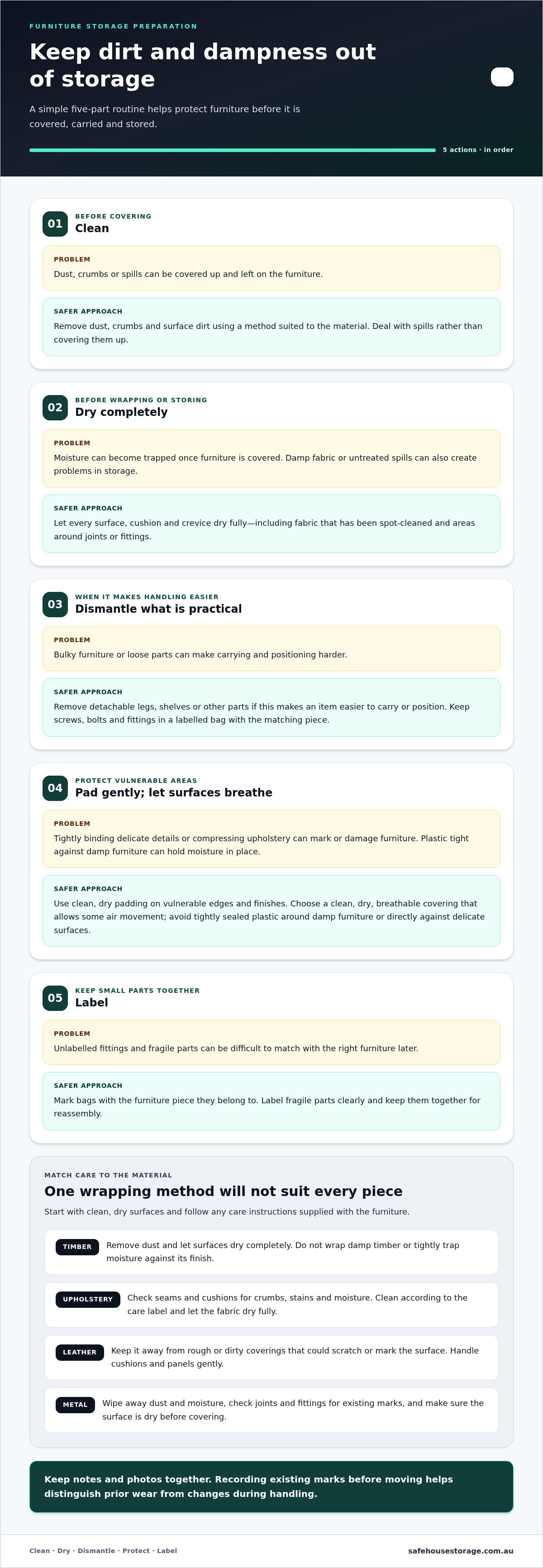
One wrapping method won’t suit every piece. Start with clean, dry surfaces and follow any care instructions supplied with the furniture. Choose protection that won’t transfer dirt or trap moisture against the material.
- Timber: Remove dust and make sure surfaces are completely dry before covering. Don’t wrap damp timber or tightly trap moisture against its finish.
- Upholstery: Check seams and cushions for crumbs, stains and signs of moisture. Clean according to the care label, then allow the fabric to dry fully.
- Leather: Keep it away from rough or dirty coverings that could scratch or mark the surface. Handle cushions and panels gently.
- Metal: Wipe away dust and moisture, and check joints and fittings for existing marks. Make sure the surface is dry before covering it.
An inspection can’t guarantee furniture will come out of storage without damage. It does help you identify existing problems, choose sensible precautions and avoid preventable handling mistakes. Keep your notes and photos together so you can refer to them while preparing each piece.
Prepare furniture for storage: clean, dry, dismantle and wrap
A good preparation routine makes furniture easier to handle and helps reduce the risk of dirt, scratches and trapped moisture. Prepare each item before it goes into storage, following its care instructions where available. The right approach depends on the surface: a timber dining table, fabric armchair and metal bed frame won’t all need the same cleaning or wrapping.
Use this order to avoid covering dirt or dampness by mistake:
- Clean: Remove dust, crumbs and surface dirt using a method suited to the material. Deal with spills rather than covering them up.
- Dry: Let every surface, cushion and crevice dry completely before wrapping or storing.
- Dismantle: Remove detachable parts where this makes an item safer to carry or easier to position.
- Protect: Add clean, dry padding to vulnerable edges and finishes without crushing soft surfaces.
- Label: Keep small fittings together and mark them with the furniture piece they belong to.
How should you clean and dry furniture before storage?
Start gently. Dust timber with a clean, soft cloth, and follow the care instructions for polished or painted finishes. Vacuum upholstered furniture with a suitable attachment to lift crumbs from seams and under cushions. For leather or metal, use a cleaning method appropriate to the surface rather than a product that could leave residue or damage the finish.
Allow everything to dry, including fabric that’s been spot-cleaned and areas around joints or fittings. Don’t store furniture with food residue, damp fabric or an untreated spill. Leftover moisture can become trapped once an item is covered, while food remnants can attract pests.
Should you dismantle and wrap furniture before storing it?
Remove legs, shelves or other detachable parts if doing so makes the furniture easier to carry or position. Keep screws, bolts and fittings in a labelled bag with the matching item. Label fragile parts clearly and keep them together so they’re easier to find when you’re ready to reassemble the piece.
Use clean, dry protective materials suited to the furniture. Padding can shield corners and finished surfaces from knocks, but don’t compress upholstery or tightly bind delicate details. Avoid wrapping plastic tightly around damp furniture or directly against a delicate surface. It can hold moisture in place and may rub or mark finishes.
Breathable furniture protection is a clean, dry covering that allows some air movement around an item, helping limit trapped moisture that can contribute to musty smells or damage. A loose cover is generally a better choice than tightly sealed plastic for longer storage. Keep the covering secure enough to stay in place, but not so tight that it presses into cushions or edges.
Preparation is one part of how to store furniture safely. Once your items are clean, dry and ready to move, you can plan a separate space with SafeHouse Storage unit options.
How to arrange furniture in a storage unit without causing damage
A crowded unit can make furniture harder to reach and increase the chance of knocks, scrapes or pressure damage. A simple layout plan helps you decide where each piece will go before you start carrying it in. That means fewer awkward reshuffles and less chance of shifting weight onto something delicate.
Think of the unit as a small room. Sketch its shape and mark the entrance, large furniture and a clear route to anything you may need later. Put items you’re unlikely to need towards the back, then keep frequently used belongings accessible near the front. Leave enough room to move safely without squeezing between unstable stacks.
Where should large and delicate pieces sit?
Start with the largest, heaviest pieces that are stable on the floor. Position them so they won’t need to be moved to reach other belongings. Keep delicate finishes, glass and upholstered surfaces away from sharp corners and heavy pressure. Don’t lean an unstable item against a wall or another piece where it could slide or fall.
Load in a considered order:
- Place heavy, steady furniture on the floor first, with its weight supported evenly.
- Position lighter pieces where they won’t press on fragile surfaces or upholstery.
- Keep detachable parts and loose items together rather than balancing them on furniture.
- Check that each piece is stable before placing anything nearby.
Don’t use a delicate table, chair or sofa as a shelf. Even a small item can leave a mark if it rests on a soft cushion or an easily scratched finish. If a piece feels awkward or unstable, pause and adjust its position rather than forcing it into a gap.
How can you keep stored furniture accessible?
Before loading, mark a practical path from the entrance to items you might need. It doesn’t have to be a wide aisle, but it should let you reach stored belongings without climbing over furniture or dragging pieces out of the way. Keep boxes and smaller items from creeping into that route as the unit fills.
Label covered furniture where the label is easy to see, and keep a simple inventory noting each item’s location. For example, record that a bedside table is near the entrance and a covered armchair is at the back. This saves guesswork later and helps you avoid moving several items to find one.
Load stable items first, protect vulnerable surfaces and keep access clear. That’s the safest loading principle to follow as you work out how to store furniture safely. Match your layout to the amount of furniture, and choose from SafeHouse Storage unit options for a separate space to manage your belongings.
How to reduce moisture, mould and pest risks while furniture is stored
Clean, completely dry furniture and suitable wrapping are your first line of defence against moisture and pests. These steps matter before storage and while your belongings are put away. Don’t add damp cushions, wet cleaning cloths or freshly watered plants to the unit alongside furniture. A cover can hide early signs of trouble, so leave it possible to inspect surfaces during planned visits.
Storage conditions can change with the weather in Murray Bridge, Tenterfield, Lithgow and Coonabarabran. After a spell of humid, wet or unusually warm weather, check accessible pieces and their coverings when practical. Look for damp patches, musty smells, visible mould or signs of pests. Finding an issue early gives you a chance to respond before it affects more of your belongings.
How can you lower the chance of moisture damage?
Only store furniture that’s clean and fully dry. Don’t tightly seal a damp surface beneath plastic or another covering that traps moisture. Use a clean, dry cover suited to the item, and leave it loose enough to allow some air movement. During a planned visit, look at the furniture and the areas around it for visible moisture or mould.
What simple steps can help discourage pests?
Remove crumbs and food residue before furniture goes into storage. Keep soil, plant matter and unsealed food out of the unit, as these can attract pests. During visits, check visible surfaces, upholstery seams and the floor around furniture. If you spot signs of pests, deal with the source promptly and avoid moving affected items against clean furniture.
Use this quick check before placing anything beside stored furniture:
- Make sure cushions, fabric and surfaces are completely dry.
- Remove food scraps, crumbs, soil and plant matter.
- Choose clean coverings that don’t hold dampness against the item.
- Keep access clear enough to inspect furniture during a visit.
These habits can reduce avoidable risks, but they can’t control every change in storage conditions. No preparation method can guarantee furniture will remain unaffected in every condition. Check your belongings periodically when practical, especially after local weather changes, and act on signs of moisture or pests rather than leaving them until your next planned check.
With a simple inspection routine and sensible preparation, you can take more control over how to store furniture safely. If your furniture needs a separate space while you manage these checks, arrange a SafeHouse Storage unit.
Choose a SafeHouse Storage unit for furniture and plan your next step
Once your furniture is prepared and you’ve planned how to load it, choose a unit that suits both the amount you’re storing and how you’ll arrange it. A tight fit can make access difficult, while extra room may help you keep a clear route to pieces you need to reach. Think about the full layout, not just whether the largest item will fit.
SafeHouse Storage offers small, medium and large self-managed storage units. To estimate the space you need, list the furniture, note which pieces will be dismantled and consider whether you’ll store other belongings alongside them. Then allow for your planned arrangement, including room to reach items without shifting heavy furniture. The small storage unit hire guide offers related sizing guidance.
What should you consider when choosing a furniture storage unit?
Start with the furniture’s overall volume and shape. A few compact chairs take up space differently from a sofa, bed frame and dining table, even if the item count is similar. Include any parts you’ve removed, and consider whether you’ll want regular access to particular pieces. Your layout needs space for stable placement as well as the furniture itself.
SafeHouse Storage units are self-managed, so you arrange and manage your stored belongings. A clear plan helps you make good use of the space and keep essential items reachable. For broader information on regional storage, explore the regional storage guide.
How can you arrange local self-storage with SafeHouse Storage?
SafeHouse Storage has local options in Murray Bridge, South Australia, and Tenterfield, Lithgow and Coonabarabran in New South Wales. Customers can arrange a storage space through an online agreement or with help from local real-estate partners. The facilities are gated and camera-monitored. These features support site security, but they can’t guarantee that furniture will be free from damage or loss, so careful preparation and loading still matter.
Use the steps in this guide to work out how to store furniture safely, then choose a unit size that fits your items and access needs. To see local options, explore SafeHouse Storage options and find a practical space for your furniture during a move, renovation or change at home.
Make your next storage step a simple one
Furniture storage often sits between two busy chapters: a home being renovated, a move in progress or a new space still taking shape. Treat the storage period as part of your plan. Keep your item notes handy and decide when you’ll check on your furniture, so it’s easier to stay organised if plans change.
If you’re still deciding how to store furniture safely, choose a space that suits your furniture and the way you’ll need to access it. SafeHouse Storage offers small, medium and large self-managed units in Murray Bridge, Tenterfield, Lithgow and Coonabarabran. Facilities are gated and camera-monitored, giving you a separate place to manage your belongings while life is in transition.
Take the next step and explore SafeHouse Storage options for self-managed storage in your area. With a little preparation and a layout that works for you, storing furniture can feel like a manageable part of the move ahead.
Frequently Asked Questions
How long can furniture stay in a storage unit?
Furniture can remain in storage for as long as you need, but its condition depends on how it was prepared and the conditions around it. For longer stays, make periodic visits part of your plan. Check for changes such as musty odours, damp patches or loose coverings, and adjust protection if needed. If your plans change, revisit the layout so frequently needed pieces remain accessible.
Can you store a mattress in a storage unit?
Yes, you can store a mattress in a storage unit. Make sure it’s clean and completely dry first, then use a suitable mattress cover to keep dust off without trapping moisture. Store it flat on a clean, supportive surface if the mattress maker’s care instructions recommend this. Avoid placing heavy furniture on top, as pressure can leave lasting dents or affect its shape.
Is it safe to store furniture in cardboard boxes?
Cardboard boxes are useful for small furniture parts, such as drawer knobs, screws or shelf fittings, but they aren’t a substitute for protecting the furniture itself. Use a sturdy box and label it with the matching item so parts don’t get separated. Keep boxes dry and avoid putting them directly on a damp floor. Don’t force bulky pieces into boxes where edges could rub or bend.
Can furniture be stored in a garage or shed instead of a storage unit?
Yes, a garage or shed can work if it’s dry, secure and has enough room to keep furniture stable and accessible. Consider whether the space is exposed to changing weather, leaks, dust or household activity. A separate storage unit may suit furniture that needs to be kept apart from daily use. Choose based on the space’s condition, security and how often you’ll need to reach your belongings.
What happens if furniture is stored while it is still damp?
Damp furniture can develop a musty smell or mould, and moisture may affect materials differently. Timber can swell or mark, metal fittings may rust, and upholstery can stay wet inside even when its surface feels dry. If an item has been stored damp, uncover it in a suitable dry place and let it air thoroughly. Check for visible mould or lasting damage before putting it back.
Should you cover furniture with plastic while it is in storage?
Plastic can help shield furniture from dust during transport, but tightly wrapping it for storage may hold moisture against the surface. If you use plastic, apply it only to clean, dry furniture and avoid sealing it tightly, especially around timber or fabric. A clean, breathable cover is often a better option for longer storage. Follow the furniture maker’s care advice for delicate finishes.
How do you protect furniture when moving it into storage?
To work out how to store furniture safely during a move, protect vulnerable corners and finishes before carrying each piece. Clear the route, keep drawers and doors secured, and use enough people to handle bulky items without dragging them. Separate loose fittings and label them. At the unit, place furniture carefully rather than sliding it across the floor, which can scrape both the item and its finish.


